All 335 letters, in the order they were written.
From May 16, 1777 to April 17, 1826: every surviving letter between John Adams and Thomas Jefferson, grouped into five periods. Filter by writer, jump to a period, or search headlines, summaries, opening words, places and topics.
189 from Adams146 from Jefferson191,851 words335 with modern text and notes
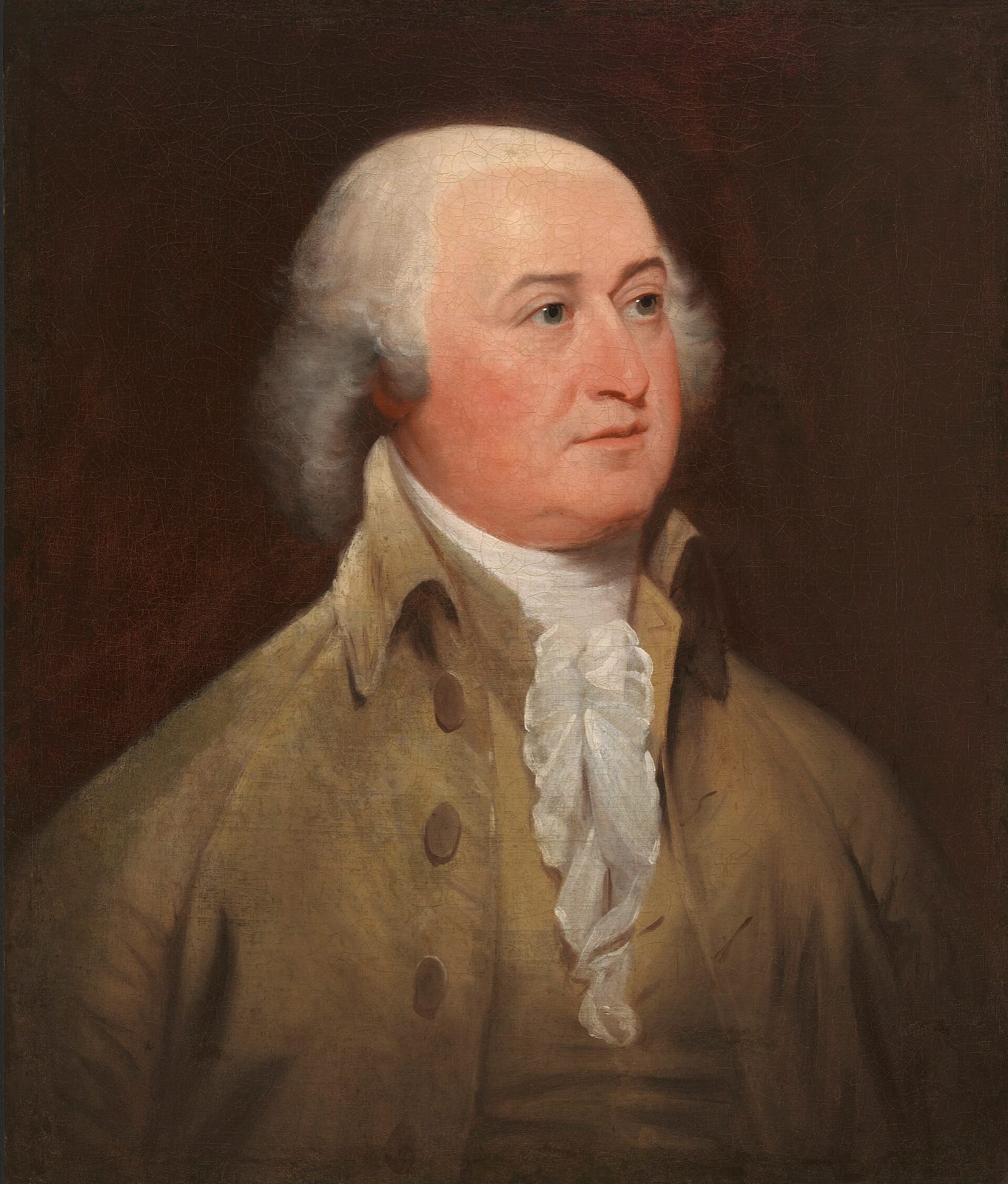
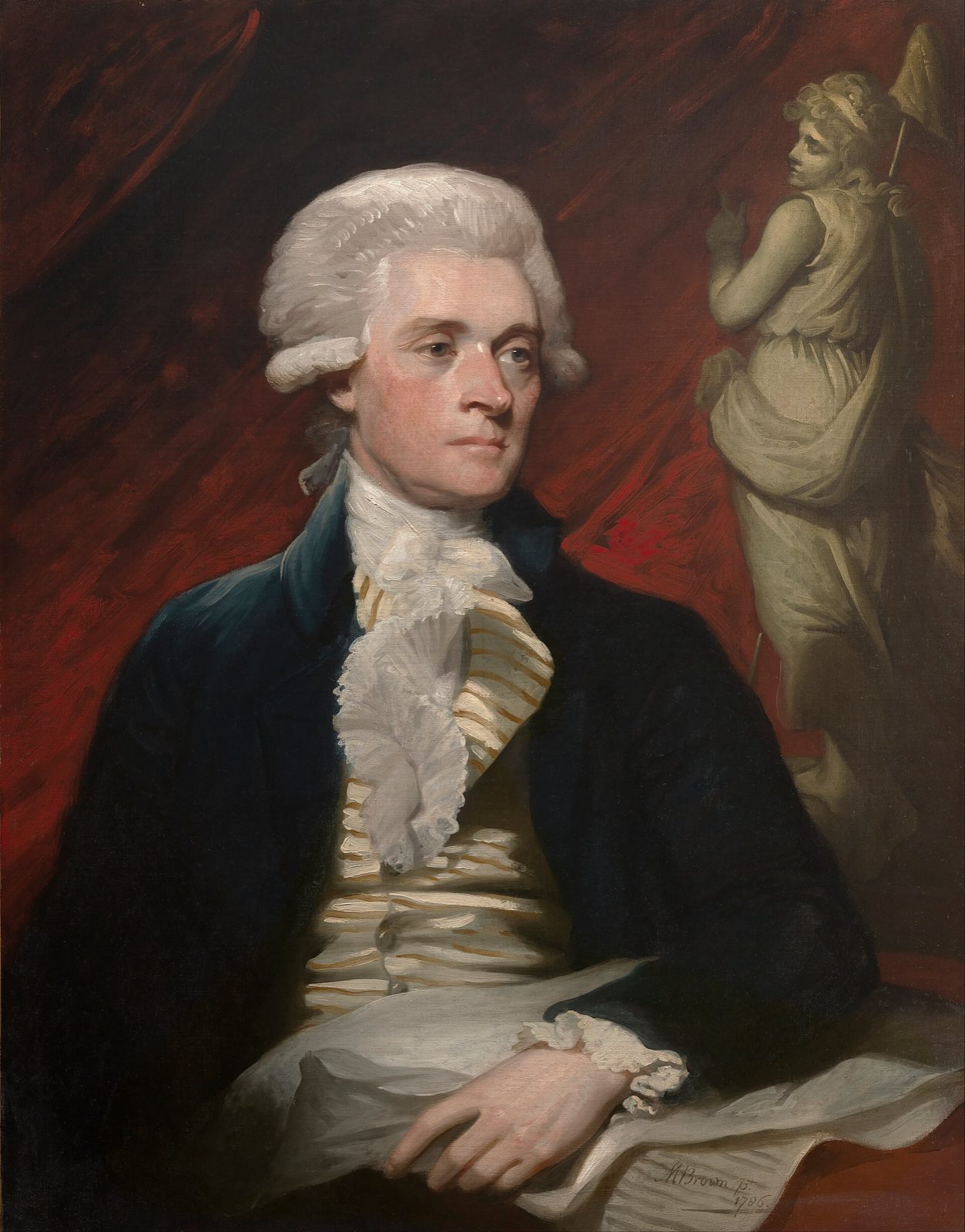
Showing 335 of 335 letters
The Revolution
1777–1784 · 8 letters
Colleagues from the Continental Congress write from separate posts: Jefferson in Virginia, Adams in Congress and then in Europe. The letters are few, brisk and practical.
1777
Jefferson to Adams· Williamsburg, Virginia
Jefferson proposes a double majority for Congress — Jefferson to Adams, May 16, 1777
From Williamsburg, Jefferson reports that Virginia has filled its battalions without a militia draft. He asks Adams to push his double-majority plan to settle the Confederation’s representation dispute, and he urges Congress to print its journals and speed up the mail.
2 min12 notes
Adams to Jefferson· Philadelphia, Pennsylvania
Adams urges Jefferson back to fight inflation — Adams to Jefferson, May 26, 1777
Adams answers Jefferson’s first letter point by point: militia drafts, representation under the Confederation, the late Journals of Congress and the post. He then begs Jefferson to return to Congress and help stop runaway prices.
4 min15 notes
Jefferson to Adams· Albemarle County, Virginia
Jefferson suggests a Tuscan loan and mocks Howe — Jefferson to Adams, August 21, 1777
Jefferson answers Adams’s worries about paper money by proposing a loan from the hoarding Grand Duke of Tuscany, perhaps negotiated by a Tuscan gentleman living in Virginia. He then scoffs at Howe’s puzzling move toward the Chesapeake.
3 min17 notes
Jefferson to Adams· Williamsburg, Virginia
Jefferson reports Virginia’s ratification of the Confederation — Jefferson to Adams, December 17, 1777
Jefferson tells Adams that Virginia has approved the Articles of Confederation. He asks Congress to declare that the Articles give it no power to grant away a monopoly of the states’ trade, and he warns that quarterly money requisitions will not work in Virginia.
3 min7 notes
1780
Adams to Jefferson· Paris
Adams on Mazzei, London riots and Charleston — Adams to Jefferson, June 29, 1780
Adams passes on Philip Mazzei’s message about his Italian loan mission and vouches for his usefulness in Paris. He then weighs the Gordon Riots, the fall of Charleston and the French and Spanish expeditions.
2 min12 notes
1781
Jefferson to Adams, Franklin and Jay· Virginia
Jefferson introduces James Monroe to the envoys in Europe — Jefferson to Adams, Franklin and Jay, October 5, 1781
Jefferson introduces his friend James Monroe, a distinguished army veteran bound for Europe to finish his studies, to Adams, Franklin and Jay. He adds that Monroe can report on the hope of capturing Cornwallis’s army and retaking the South.
1 min8 notes
1784
Jefferson to Adams· Boston, Massachusetts
Jefferson plans his crossing to join the commission — Jefferson to Adams, June 19, 1784
Jefferson tells Adams that he has been named to the new treaty commission with Adams and Franklin. He regrets arriving in Boston too late to escort Mrs. Adams, sketches his sailing plans, and reports that Congress has adjourned.
2 min6 notes
Jefferson to Adams· At sea, off the Isles of Scilly
Jefferson writes from shipboard, nearly in France — Jefferson to Adams, July 24, 1784
Writing from the Ceres off the Isles of Scilly, Jefferson tells Adams that he sailed early from Boston rather than wait for the French packet. He hopes to land in Brittany and reach Paris in two weeks, and he has the commission’s papers with him.
1 min12 notes
Ministers in Europe
1784–1789 · 140 letters
Adams in London as the first American minister to Great Britain, Jefferson in Paris as minister to France. Letters cross the Channel on treaties and trade, Barbary captives, Dutch loans, books, family errands and the new Constitution at home.
1784
Jefferson to Adams and Franklin· Paris
Jefferson offers two drafts for the British ambassador — Jefferson to Adams and Franklin, October 17, 1784
Jefferson sends his fellow commissioners their letter to the Duke of Dorset on the leftover peace issues. He also sends two drafts of a letter on a trade treaty, one of which recites their dealings with Hartley, and asks them to choose and sign one.
1 min7 notes
1785
Jefferson to Adams and Franklin· Paris
Jefferson circulates his notes on the Prussian treaty — Jefferson to Adams and Franklin, March 1, 1785
Jefferson sends Adams and Franklin his notes on Prussia’s proposed changes to the draft treaty. He asks Adams to pass them on to Franklin, proposes a meeting at Passy on Thursday at noon, and encloses the related papers.
1 min6 notes
Adams to Jefferson and Franklin· Auteuil, France
Adams asks Vergennes’s advice on Morocco — Adams to Jefferson and Franklin, March 20, 1785
Adams reports to his sick colleagues Franklin and Jefferson on his visit to Vergennes at Versailles. The foreign minister explained why the Emperor of Morocco was offended, advised the commissioners to write to him, and asked them to put every request in writing.
4 min16 notes
Adams to Jefferson· Auteuil, France
Adams arranges payment for the war medals and swords — Adams to Jefferson, May 19, 1785
On the eve of leaving for London, Adams authorizes Jefferson to draw on £1,000 sterling, which the Amsterdam bankers have deposited in Paris, to pay for the medals and swords Colonel Humphreys is having made for the United States.
1 min6 notes
Adams to Jefferson· Montreuil-sur-Mer, France
Adams on drought, the road and Jefferson’s Notes — Adams to Jefferson, May 22, 1785
On the road to London, Adams describes the drought-stricken French countryside and his unhurried plans. He sends greetings, asks for news of his son’s packet, praises Jefferson’s Notes on the State of Virginia, and passes on the ladies’ wish that West and Copley be named.
2 min15 notes
Adams to Jefferson· Calais
Adams at Calais, waiting to cross to England — Adams to Jefferson, May 23, 1785
Writing from a Calais inn the night before he crosses to England, Adams describes the drought-starved French countryside. He wryly hopes the dry weather will persuade Europe to open its West Indian islands to free American trade in food.
1 min7 notes
Jefferson to Adams· Paris
Jefferson in the dumps after the Adamses leave — Jefferson to Adams, May 25, 1785
Jefferson tells Adams that John Quincy has reached Lorient safely and passes on other news. He jokes about his Notes on Virginia and his lonely afternoons, and describes how soldiers drove him away from the illuminations for the Queen’s entry into Paris.
2 min19 notes
Adams to Jefferson· London
Adams asks Jefferson to stop his wine — Adams to Jefferson, May 27, 1785
Newly arrived in London, Adams learns he must pay heavy English duties on wine. He asks Jefferson to halt the shipment from France and to cancel a Bordeaux order, and he offers to sell Jefferson the wine.
1 min12 notes
Adams to Jefferson· London
Adams is received as minister in London — Adams to Jefferson, May 27, 1785
Adams reports his smooth passage through Dover, his first meeting with the foreign secretary Carmarthen, the plan for presenting his credentials to George III, and the London custom that the other envoys must call on him first.
2 min10 notes
Adams to Jefferson and Franklin· London
Adams awaits his audience with the King — Adams to Jefferson and Franklin, May 29, 1785
Adams tells Franklin and Jefferson that John Jay has sent Barbary treaty papers by Captain Lamb, who has not yet arrived. He also reports that he has shown his credentials to Lord Carmarthen and will meet the King next Wednesday.
1 min7 notes
Jefferson to Adams· Paris
Jefferson on Adams’s wine, newspapers and the Prussian treaty — Jefferson to Adams, June 2, 1785
Jefferson reports that Adams’s wine had already left Paris and arranges for most of it to be held at Rouen. He asks for London newspapers, forwards a letter to Nabby, and reports in cipher on the Prussian and Tuscan treaties.
3 min24 notes
Adams to Jefferson· London
Adams reports his first audience with George III — Adams to Jefferson, June 3, 1785
Adams formally reports that he presented his credentials as the first American minister to Britain to George III on June 1, 1785, and was received more kindly than he expected. He also gives news of Colonel Smith and the coming court days.
1 min9 notes
Adams to Jefferson· London
Adams on court ceremony, London air and wine — Adams to Jefferson, June 7, 1785
Adams describes the King’s birthday reception in London and an apt maxim George III repeated in French. He complains of ceremony and the city’s foul air, and urgently asks Jefferson to stop his wine shipments from France.
2 min15 notes
Jefferson and Franklin to Adams· Passy, France
Franklin and Jefferson propose a reward for Pecquet — Jefferson and Franklin to Adams, June 15, 1785
Franklin and Jefferson ask Adams to approve a payment of 150 guineas or 4,000 livres to John Baptist Pecquet, who helped American prisoners at Lisbon. They also acknowledge Adams’s report of his reception at the court of London.
2 min10 notes
Adams to Jefferson and Franklin· London
Adams asks for a draft British commercial treaty — Adams to Jefferson and Franklin, June 20, 1785
From London, Adams asks Franklin and Jefferson to draft a commercial treaty he can propose to Great Britain. He suggests using the treaty agreed on with Prussia as the model and asks them to send him a copy.
1 min5 notes
Jefferson to Adams· Paris
Jefferson on Prussia, Barbary and London newspapers — Jefferson to Adams, June 22, 1785
Jefferson reports Prussia’s agreement to the signing plan, sends Adams the commissioners’ letter to Jay, and warns that Franklin’s departure will leave the two of them alone. He asks about the missing Mr. Lamb and wants London newspapers and pamphlets.
2 min18 notes
Jefferson to Adams· Paris
Jefferson’s creed on Congress and commercial treaties — Jefferson to Adams, July 7, 1785
Jefferson explains how he and Adams will sign the Prussian treaty separately, with William Short carrying it. He asks about John Lamb, sets out his view that commercial treaties bring trade under Congress, and asks Adams to price life insurance for the sculptor Houdon.
5 min19 notes
Jefferson and Franklin to Adams· Passy, France
Franklin and Jefferson send Adams a British treaty draft — Jefferson and Franklin to Adams, July 8, 1785
Franklin and Jefferson answer Adams’s request with a draft commercial treaty for Britain. It is based on the Danish model, with changes drawn from the Prussian and Tuscan talks, and they hope Britain can be persuaded to restore its old bounties on American goods.
1 min16 notes
Jefferson to Adams· Paris
Jefferson asks help with Franklin’s baggage — Jefferson to Adams, July 11, 1785
As Benjamin Franklin leaves Paris for home, Jefferson asks Adams to get English permission for Franklin’s 150 to 200 boxes to pass from one ship to another at Cowes without going through customs.
1 min7 notes
Adams to Jefferson· London
Adams, newly settled in London, chases treaty draft — Adams to Jefferson, July 16, 1785
Writing from his new house in Grosvenor Square, Adams apologizes for his delay, deals with his shipped goods and Petit’s bill, and advises Jefferson on getting newspapers free. He presses for the draft commercial treaty and notes Franklin’s departure and the stir over Boston.
1 min14 notes
Adams to Jefferson· London
Adams arranges the Prussian treaty and distrusts Britain — Adams to Jefferson, July 18, 1785
Adams approves sending William Short to The Hague with the Prussian treaty and handles errands for Jefferson. In a ciphered final paragraph he warns of signs that Britain means to ruin American shipping.
3 min30 notes
Adams to Jefferson· London
Adams on the Prussian treaty and alien duties — Adams to Jefferson, July 24, 1785
Adams looks forward to signing the Prussian treaty, reports that Franklin’s baggage has been cleared, proposes treating Americans and Britons like each other’s own natives to escape the alien duties, and mocks Britain’s huge tobacco duty, which feeds smuggling.
2 min13 notes
Jefferson to Adams· Paris
Jefferson sends the Prussian treaty and a bold draft — Jefferson to Adams, July 28, 1785
Jefferson sends William Short to London with the signed Prussian treaty and asks about Dumas, Short’s pay and Houdon’s insurance. He passes on European news and privately encloses a draft under which nations would treat each other’s citizens as natives.
5 min30 notes
Jefferson to Adams· Paris
Jefferson backs equal duties for foreigners and natives — Jefferson to Adams, July 31, 1785
Jefferson agrees with Adams that the British treaty should treat each nation’s citizens as natives, not just as the most favored nation. He explains why Congress chose otherwise in 1784, and he asks Adams for the numbers missing from his copy of their cipher.
3 min17 notes
Adams to Jefferson· London
Adams on Dumas, Houdon and British envy at sea — Adams to Jefferson, August 4, 1785
Adams settles Dumas’s title and Short’s pay, reports on insuring Houdon’s life, and asks Jefferson’s help freeing an American held in Mexico. He also requests French trade decrees and reflects on exchange rates and Britain’s jealousy of American shipping.
4 min19 notes
Jefferson to Adams· Paris
Jefferson sends Adams a draft Barbary treaty — Jefferson to Adams, August 6, 1785
Jefferson sends Adams a draft treaty for the Barbary states, worries about the overdue courier John Lamb, and proposes sending Edward Bancroft or John Paul Jones instead if Lamb does not arrive soon.
2 min26 notes
Adams to Jefferson· London
Adams proposes an American navigation act against Britain — Adams to Jefferson, August 7, 1785
Adams asks Jefferson to pay for and keep a cask of wine left at Auteuil. He then argues that if Britain keeps shutting out American ships, all the states must adopt a strict navigation act. A postscript fills gaps in their cipher.
4 min22 notes
Jefferson to Adams· Paris
Jefferson on French trade and Houdon’s insurance — Jefferson to Adams, August 10, 1785
Jefferson sends Adams two French decrees against foreign manufactures and reports on French West Indies trade and his talks with Vergennes. He explains why he cannot afford to follow the court to Fontainebleau and asks Adams to insure Houdon’s life.
3 min19 notes
Jefferson to Adams· Paris
Jefferson on opened mail, Barclay and Rohan’s arrest — Jefferson to Adams, August 17, 1785
Jefferson warns Adams that Adams’s last letter was opened in the post. He reports that Thomas Barclay will go to the Barbary states, corrects an error in their cipher, and passes on news of Cardinal de Rohan’s arrest.
1 min10 notes
Adams to Jefferson· London
Adams on sending an agent to Barbary — Adams to Jefferson, August 18, 1785
Adams questions whether he and Jefferson may send a deputy to the Barbary states, says what such an agent should be told to do, proposes cuts to Article 17 of the draft treaty, and introduces James Smith.
2 min18 notes
Adams to Jefferson· London
Adams on the opened letter and Barclay’s mission — Adams to Jefferson, August 23, 1785
Adams shrugs off the news that Britain and France likely read his intercepted letter, takes hope from Irish resistance and American navigation acts, endorses Thomas Barclay as Barbary envoy, and promises to have Dr. Price insure Houdon’s life.
1 min11 notes
Adams to Jefferson· London
Adams on whaling bounties and trade retaliation — Adams to Jefferson, September 4, 1785
Adams forwards a puzzling plea from Roscoff and reports no word from Congress or the British ministry. He predicts that the French and British whaling schemes will fail, and he argues that America must answer closed markets with restrictions of its own.
2 min14 notes
Jefferson to Adams· Paris
Jefferson drafts the plan for the Morocco mission — Jefferson to Adams, September 4, 1785
Jefferson sends Adams draft papers for Barclay’s mission to Morocco. He proposes Franks as secretary, a split of the $80,000 Barbary fund and ways to draw the money from Holland, and he raises the stalled Prussian treaty.
3 min20 notes
Jefferson to Adams· Paris
Jefferson seeks fair expenses for Mazzei — Jefferson to Adams, September 4, 1785
Jefferson asks Adams to estimate what Philip Mazzei spent on his wartime loan mission for Virginia. Mazzei believes the state underpaid his expenses, and Jefferson wants to see him treated fairly.
1 min3 notes
Jefferson to Adams· Paris
Jefferson asks how to pay the interest due in Paris — Jefferson to Adams, September 4, 1785
In a second note the same day, Jefferson reports that the banker Grand must pay American interest due in Paris without authority to draw on the money in Holland, and asks Adams whether the Treasury has instructed him.
1 min6 notes
Adams to Jefferson· London
Adams vouches for Mazzei’s expenses abroad — Adams to Jefferson, September 11, 1785
Answering Jefferson’s question, Adams says Philip Mazzei lived respectably and was well regarded across Europe. He guesses that Mazzei’s travel and living costs could not have come to less than a thousand pounds.
1 min6 notes
Adams to Jefferson· London
Adams has no orders about the French interest — Adams to Jefferson, September 11, 1785
Adams tells Jefferson he has had no word from the Treasury or Congress about paying the interest due in France. He also mocks the policy of sending no ministers to Europe and suggests unpaid merchant consuls instead.
1 min7 notes
Adams to Jefferson· London
Adams signs the letter for Morocco’s emperor — Adams to Jefferson, September 15, 1785
Adams returns the signed letter for the Emperor of Morocco, holds off on asking the Dutch for help so that Barclay’s mission stays secret, and sets out the arguments Barclay can use to get peace with the Barbary states on moderate terms.
2 min18 notes
Adams to Jefferson· London
Adams introduces Baron de Poellnitz and doubts Algerine rumors — Adams to Jefferson, September 16, 1785
Adams introduces the Baron de Poellnitz, who is going to France to join his wife. He says Colonel Franks leaves tomorrow and hopes that reports of Algerians selling captured American ships are as false as other rumors.
1 min6 notes
Adams to Jefferson· London
Adams asks Jefferson to judge his court speeches — Adams to Jefferson, September 18, 1785
Adams sends Jefferson, in confidence, the speeches exchanged at his presentation to the King and Queen. He asks whether he said too much, and explains that he gave a speech only because everyone insisted it was required.
1 min6 notes
Jefferson to Adams· Paris
Jefferson reports Lamb’s arrival in Paris — Jefferson to Adams, September 19, 1785
Jefferson tells Adams that John Lamb has reached Paris with new powers from Congress for the Barbary negotiations, that Lamb has agreed to go to Algiers, and that their dispatches must be redrawn and sent to Adams for approval.
1 min7 notes
Jefferson to Adams· Paris
Jefferson proposes sending Lamb to Algiers — Jefferson to Adams, September 24, 1785
Jefferson sends Adams Congress’s new Barbary papers and the revised drafts, proposes making John Lamb their agent to Algiers under safeguards, reports two American ships captured by Algiers, and announces the signed Prussian treaty.
6 min28 notes
Jefferson to Adams· Paris
Jefferson reads the king’s unguarded answer — Jefferson to Adams, September 24, 1785
Jefferson tells Adams his court speeches compromised nothing, reads George III’s reply as a demand for preference that America cannot grant, and weighs whether trade distress might spur federal reform. He also asks about insuring Houdon’s life and his London newspapers.
3 min10 notes
Adams to Jefferson· London
Adams introduces Boylston and his whale oil — Adams to Jefferson, September 25, 1785
Adams introduces the wealthy Boston merchant Thomas Boylston to Jefferson. Boylston hopes to open the French market to American spermaceti oil, and Adams vouches for his judgment and asks Jefferson to help him.
1 min5 notes
Adams to Jefferson· London
Adams signs the Barbary papers and weighs agents — Adams to Jefferson, October 2, 1785
Adams returns the signed Barbary mission papers, doubts that an unarmed agent can win peace with Algiers, and weighs Stephen Sayre as a second agent. He urges vigilance against meddling foreign consuls and sets out how the agents will be commissioned and paid.
4 min25 notes
Adams to Jefferson· London
Adams on the king’s riddle and France — Adams to Jefferson, October 3, 1785
Adams says George III can wait till Doomsday for a British alliance and threatens closer ties with France if Britain stays unfair. He then reports on insuring Houdon’s life and on getting London newspapers to Jefferson.
2 min21 notes
Jefferson to Adams· Paris
Jefferson introduces the Chevalier Dolomieu — Jefferson to Adams, October 5, 1785
Jefferson introduces the Chevalier Dolomieu to Adams. Dolomieu is a Knight of Malta who served with Rochambeau’s army in America and is about to travel to England. Jefferson vouches for his merit from their acquaintance in America.
1 min3 notes
Jefferson to Adams· Paris
Jefferson on Portugal’s reply and the Bergen claim — Jefferson to Adams, October 11, 1785
Jefferson sends the Barbary papers and the Prussian treaty to Congress, reports Portugal’s cool reply, which he reads as ending their commission’s talks with Portugal, and asks Adams to pursue the Danish claim for John Paul Jones’s Bergen prizes.
3 min20 notes
Jefferson to Adams· Paris
Jefferson asks after two travelers to America — Jefferson to Adams, October 18, 1785
Jefferson confirms he delivered Adams’s enclosure to the banker Grand, notes Franklin’s safe return to America, and asks for news of Otto and Doradour’s crossing for Madame de Doradour’s sake. He keeps the letter short because it goes by post.
1 min8 notes
Adams to Jefferson· London
Adams on dwindling funds and buttoned-up ministers — Adams to Jefferson, October 24, 1785
Adams reports Preston’s lost letters and Franklin’s welcome home, confirms the insurance on Houdon’s life, warns that the ministers’ funds are running out, notes Prussia’s ratification of the treaty, and complains that British ministers reveal nothing.
2 min15 notes
Adams to Jefferson· London
Adams on masts, whale oil and British trade — Adams to Jefferson, November 1, 1785
Adams passes on news from London: Otto’s safe arrival, a rumored French contract for American masts, Arnold’s departure for Halifax, and British talk about trade. He hopes France will buy American whale oil and asks why Virginians don’t sort their own tobacco.
3 min21 notes
Adams to Jefferson· London
Adams on the Danish prizes and foreign trade — Adams to Jefferson, November 4, 1785
Adams passes the Jones claim against Denmark back to Jefferson, asks for France’s new decree on fish, reports quietly on Portugal’s envoy, and warns that Europe means to profit from American simplicity.
2 min12 notes
Adams to Jefferson· London
Adams reports his trade talks with Portugal’s envoy — Adams to Jefferson, November 5, 1785
Adams gives Jefferson a detailed account of his first trade talks with the Portuguese envoy in London: flour and fish, wines and tea, Brazil’s closed ports, and a possible American navigation act against Britain.
10 min24 notes
Jefferson to Adams· Paris
Jefferson on whale oil, trade wars and Denmark — Jefferson to Adams, November 19, 1785
Jefferson answers four of Adams’s letters. He reports on whale oil, French ship timber and Virginia tobacco debts, backs a navigation act aimed only at Britain, argues that the Danish prize claim belongs to Adams, and sends on Tuscany’s new treaty draft.
9 min30 notes
Jefferson to Adams· Paris
Jefferson makes the case for trade with Portugal — Jefferson to Adams, November 27, 1785
Jefferson welcomes Portugal’s renewed interest in a treaty. He sets out the case for American flour, wine, Brazilian goods and ginseng, lists the changes he wants in the draft, and proposes a joint naval league against Algiers.
8 min30 notes
Adams to Jefferson· London
Adams introduces a Boston whale-oil merchant — Adams to Jefferson, December 2, 1785
Adams introduces Nathaniel Barrett, a Boston merchant coming to France to negotiate over Sangrain’s whale-oil proposals. He adds that the introduction is a formality, since Jefferson’s zeal for the American whale fishery would have been enough.
1 min5 notes
Jefferson to Adams· Paris
Jefferson wins a lower French duty on whale oil — Jefferson to Adams, December 10, 1785
Jefferson reports that, working through Lafayette, he won a one-year cut in French duties on American whale oil for all shippers, not just Boylston. He also describes Barrett’s arrival and a plan to promote spermaceti candles in fashionable Paris.
3 min21 notes
Jefferson to Adams· Paris
Jefferson on delaying Barclay for Beaumarchais’s accounts — Jefferson to Adams, December 11, 1785
Jefferson tells Adams that Beaumarchais has finally agreed to settle his huge accounts with Thomas Barclay, which will hold up Barclay’s journey for a month. He asks whether Adams agrees to the delay and asks him to forward a letter to Monroe without using the English post.
1 min8 notes
Adams to Jefferson· London
Adams recommends Winslow Warren for consul at Lisbon — Adams to Jefferson, December 13, 1785
Adams hopes Congress will not make the ministers choose consuls, a thankless job of weighing merit. If Jefferson must choose a consul for Lisbon, Adams asks him to remember Winslow Warren, whose family has sacrificed so much for the American cause.
3 min10 notes
Adams to Jefferson· London
Adams on whale oil, Barclay and Pinto — Adams to Jefferson, December 20, 1785
Adams discusses Barrett’s and Boylston’s efforts to sell American whale oil in France, asks Jefferson to confirm the reduced French duty, urges Barclay not to delay his Morocco mission, and reports that Pinto’s illness is slowing the Portuguese treaty.
2 min16 notes
Jefferson to Adams· Paris
Jefferson on whale oil, consuls and a Scottish republican — Jefferson to Adams, December 27, 1785
Jefferson introduces a rare Scottish republican, answers a charge that he and Adams slighted the French treaty, reports in detail on the French market for Boston whale oil, and discusses the Lisbon consulship, the Portuguese treaty and the Barbary commissions.
4 min27 notes
1786
Jefferson to Adams· Paris
Jefferson on unpaid officers and an Austrian treaty — Jefferson to Adams, January 12, 1786
Jefferson asks Adams to send money from the Dutch loans to pay overdue interest to French officers. He also reports that the imperial ambassador has reopened talk of a commercial treaty with Austria, and asks Adams for advice quickly.
3 min14 notes
Jefferson to Adams· Paris
Jefferson reports an Austrian overture on trade — Jefferson to Adams, January 12, 1786
In a postscript to his other letter of the same day, Jefferson tells Adams that the Austrian embassy’s secretary has raised again the Emperor’s old offer of a commercial treaty. Jefferson asks for Adams’s views, since the two must act jointly.
1 min7 notes
Adams to Jefferson· London
Adams denies advising on the Oglethorpe estate — Adams to Jefferson, January 19, 1786
Adams denies ever giving an opinion on the Mézières inheritance claim, then covers French duties, the status of Americans born before independence, Portugal’s diplomatic etiquette, the whale-oil trade, Virginia’s sound finances and Britain’s coming reply on the frontier posts.
7 min30 notes
Adams to Jefferson· London
Adams backs an Austrian trade treaty — Adams to Jefferson, January 28, 1786
Adams says he can’t pay the French officers’ interest without orders from Congress, and he worries about both ministers’ salaries. He urges Jefferson to negotiate a commercial treaty with the Emperor’s ambassador on the Prussian model, and he introduces Mr. Joy.
1 min10 notes
Jefferson to Adams· Paris
Jefferson puts the Mézières inheritance claim to rest — Jefferson to Adams, February 7, 1786
Jefferson tells Adams that the French have dropped the Mézières claim to Oglethorpe’s lands, then argues that Americans and Britons are now aliens to each other. He also urges sending a minister to Lisbon and passes along news from Virginia.
3 min19 notes
Adams to Jefferson· London
Adams smokes a pipe with Tripoli’s envoy — Adams to Jefferson, February 17, 1786
Adams gives a comic account of his ceremonial visit to Tripoli’s ambassador in London. The envoy declares Tripoli at war with America until a treaty is bought. Adams asks Jefferson for the draft treaty and his advice.
5 min17 notes
Adams to Jefferson· London
Adams summons Jefferson to London over Barbary — Adams to Jefferson, February 21, 1786
Adams sends Colonel Smith to Paris to urge Jefferson to come to London at once. He wants to finish the Portuguese treaty and, more urgently, to confer on talks with Tripoli’s envoy before a long Barbary war breaks out.
1 min10 notes
Adams to Jefferson· London
Adams introduces Samuel Hartley to Jefferson — Adams to Jefferson, February 25, 1786
Adams writes a short letter of introduction for Samuel Hartley, a relative of the British diplomat David Hartley. Hartley has business in Paris, and Adams asks Jefferson to show him courtesy whether or not he can help.
1 min4 notes
Jefferson, W. S. Smith and Peters to Adams· London
Three diners send Adams a rhymed apology — Jefferson, W. S. Smith and Peters to Adams, March 21, 1786
Jefferson, William Stephens Smith and Richard Peters stopped for steaks at Dolly’s chop house in London and missed a better dinner. From there they send Adams a jointly signed, mock-solemn apology in comic rhyming couplets.
1 min6 notes
Jefferson to Adams· Paris
Jefferson on Algiers’ price and an Austrian treaty — Jefferson to Adams, May 11, 1786
Jefferson forwards reports showing that peace with Algiers would cost far more than the commissioners can offer, and suggests Lamb report to Congress. He also tells Adams that the Austrian ambassador wants to negotiate a treaty just as their commissions expire.
2 min17 notes
Adams to Jefferson· London
Adams introduces Mr. Smith and weighs New York — Adams to Jefferson, May 16, 1786
Adams introduces young Mr. Smith, a nephew of the Rutledges who is going to live in France. He passes on Jay’s one-line news that every state but New York has approved the Impost, and predicts that New York must give way.
1 min6 notes
Jefferson to Adams· Paris
Jefferson introduces the young Tronchin of Geneva — Jefferson to Adams, May 17, 1786
Jefferson introduces to Adams the son of Geneva’s minister at the French court. The young man is traveling in England and plans to visit America, where his father hopes to establish some of the family.
1 min4 notes
Adams to Jefferson· London
Adams on haggling for the Algiers captives — Adams to Jefferson, May 23, 1786
Adams answers Jefferson’s Barbary dispatches. He agrees that the agents Lamb and Randall should be recalled and that Jefferson should go on with the Austrian treaty talks, and he passes on the Dey of Algiers’ steep ransom prices for the American captives.
2 min14 notes
Jefferson to Adams· Paris
Jefferson forwards new Barbary papers to Adams — Jefferson to Adams, May 30, 1786
Jefferson sends Adams more letters about the Barbary negotiations and says they strengthen his wish to call Lamb and Randall home to Congress. He also forwards a paper from the Paris Academy of Surgery and asks for a copy of the Portuguese treaty.
1 min11 notes
Jefferson to Adams· Paris
Vergennes doubts a mission to Constantinople — Jefferson to Adams, May 30, 1786
In a short follow-up to his other letter of the same day, Jefferson reports Vergennes’s view: an embassy to the Ottoman court would be costly and would not make peace with Algiers any cheaper, since only money and fear work there.
1 min9 notes
Adams to Jefferson· London
Adams counts the cost of Barbary peace — Adams to Jefferson, June 6, 1786
Adams agrees to send Lamb and Randall home and argues that buying peace from the Barbary states would cost far less than war or lost trade. He insists that Congress first needs a revenue so it can borrow.
3 min16 notes
Jefferson to Adams· Paris
Jefferson on Barbary delays and Cherbourg’s harbor — Jefferson to Adams, June 16, 1786
Jefferson forwards news of Barclay and asks why Lamb and Randall have gone silent. He reports his free-port advice to Sweden about St. Bartholomew, passes on a reported capture at Algiers, and describes France’s huge harbor works at Cherbourg.
2 min21 notes
Jefferson to Adams· Paris
Jefferson, rushed and in the dark about America — Jefferson to Adams, June 23, 1786
In a hurried note, Jefferson sends Adams a copy of a letter from John Lamb and says he has written to Lamb and Randall as they agreed. He also mentions a strange newspaper report about American troops marching on the English-held posts, and says he has had almost no news from home.
1 min8 notes
Adams to Jefferson· London
Adams advises calling Lamb home from Algiers — Adams to Jefferson, June 25, 1786
Adams urges that Lamb report to Congress and that no more money be spent on missions to the Barbary powers. He also comments on the Swedish minister and the King’s visit to Cherbourg, and describes a family trip to Portsmouth.
2 min12 notes
Adams to Jefferson· London
Adams asks help for a hostage at Dunkirk — Adams to Jefferson, June 26, 1786
Adams forwards papers about Alexander Gross, an American seaman held at Dunkirk as a ransom hostage. He asks Jefferson to raise the case with Vergennes and Rayneval at Versailles, and argues that France should simply set him free.
1 min10 notes
Adams to Jefferson· London
Portugal’s queen shields American ships from Algiers — Adams to Jefferson, June 29, 1786
Adams sends Jefferson letters to Lamb and Randall for signing, puzzled that they are still in Spain. He reports that Portugal’s queen has ordered her squadron at Gibraltar to protect American ships from the Algerines.
1 min8 notes
Adams to Jefferson· London
Adams argues for buying peace with Barbary — Adams to Jefferson, July 3, 1786
Adams dismisses a war rumor about the western posts as a stock-market trick. He sets out four propositions showing that peace with the Barbary states must be bought, and bought quickly, and asks Jefferson and Lafayette whether they would rather fight.
3 min13 notes
Jefferson to Adams· Paris
Jefferson on Algiers, treaties and the tobacco monopoly — Jefferson to Adams, July 9, 1786
Jefferson reports on recalling the Algiers agents Lamb and Randall, agrees that Congress must first find money, asks about the Portuguese and Prussian treaties, and describes the impost, whale oil duties and the breaking of Robert Morris’s tobacco monopoly.
4 min28 notes
Jefferson to Adams· Paris
Jefferson argues for war rather than tribute — Jefferson to Adams, July 11, 1786
Replying to Adams’s four propositions, Jefferson lays out why he would rather win peace from Algiers by war than buy it. He costs out a 150-gun fleet, proposes a league with Naples and Portugal, and pledges to follow whatever plan is adopted.
6 min15 notes
Adams to Jefferson· London
Adams on the Prussian treaty and whale oil — Adams to Jefferson, July 16, 1786
Adams proposes how to exchange the Prussian treaty ratifications, passes on news of Pinto and a family joke about Jefferson’s Notes, and argues that American whale oil could sell across Europe once speculation in public debt paper ends.
2 min19 notes
Adams to Jefferson· London
Adams answers Jefferson on war with Algiers — Adams to Jefferson, July 31, 1786
Adams answers Jefferson’s case for war with Algiers. He would fight only if America would fight forever, and he doubts that force alone could beat the Barbary states. He predicts that Congress and the states will pay for neither war nor peace, and he passes on news about trade and debts.
4 min22 notes
Jefferson to Adams· Paris
Jefferson on whale oil duties and Lamb’s accounts — Jefferson to Adams, August 8, 1786
Jefferson reports that France will probably not cut its whale oil duty further for now, though a one-third cut is expected later. He forwards the Barbary letters, asks how to settle Lamb’s accounts, and requests copies of the ratified Prussian treaty.
1 min10 notes
Jefferson to Adams· Paris
Jefferson proposes sending Barclay on to Algiers — Jefferson to Adams, August 13, 1786
Jefferson forwards news from Madrid and Morocco and suggests that Barclay try Algiers, cheaply, for whatever he can learn. He asks Adams to sign the papers and says Grand holds three months’ money for the diplomats.
1 min11 notes
Jefferson to Adams· Paris
Jefferson on Morocco, Algiers and a botched encyclopedia — Jefferson to Adams, August 27, 1786
Jefferson sends Adams hopeful news of peace with Morocco, presses him to send Barclay to Algiers, and complains that a French encyclopedia article on the United States came out full of errors and flattery he had wanted to correct.
3 min16 notes
Adams to Jefferson· London
Adams doubts the value of a mission to Algiers — Adams to Jefferson, September 11, 1786
Back from Holland, Adams reports the Prussian treaty ratified and Utrecht’s popular magistrates sworn in, warns that high London prices threaten the French whale-oil trade, and argues against sending Barclay on to the other Barbary states.
3 min19 notes
Jefferson to Adams· Paris
Jefferson drops the plan for an Algiers mission — Jefferson to Adams, September 26, 1786
Jefferson defers to Adams and drops Barclay’s mission to Algiers. He encloses Barbary correspondence and reports on L’Orient insurance rates, the whale-oil duties and Barrett’s contract, and he asks for copies of the Prussian treaty.
2 min13 notes
Jefferson to Adams· Paris
Jefferson on Barclay, Lamb and the Moroccan treaty — Jefferson to Adams, October 23, 1786
Jefferson reports Barclay’s arrival at Cadiz and explains his failed attempt to freeze John Lamb’s funds at Madrid. He asks Adams who should conclude the definitive treaty with Morocco.
2 min17 notes
Jefferson to Adams· Paris
Jefferson reports French trade concessions won with Lafayette — Jefferson to Adams, October 27, 1786
Jefferson sends Adams Calonne’s letter setting out France’s new trade concessions on American goods. He credits Lafayette’s energetic help and asks that the letter stay out of the newspapers for two or three months.
1 min7 notes
Adams to Jefferson· London
Adams on Lamb’s recall and New England unrest — Adams to Jefferson, November 30, 1786
Adams sends copies of the Prussian Treaty and Congress’s cancellation of John Lamb’s Algiers commission, leaves to Jefferson the choice of envoy for the Moroccan treaty, and assures him the Massachusetts tax revolt will strengthen government.
1 min11 notes
Jefferson to Adams· Paris
Jefferson sends the Morocco treaty for signing — Jefferson to Adams, December 20, 1786
Jefferson sends Adams the Morocco treaty and signed ratifications by Colonel Franks and proposes joint steps over John Lamb’s refusal to come home. He says Adams’s letter has calmed his worry about the unrest in New England.
3 min21 notes
1787
Jefferson to Adams· Paris
Jefferson proposes the Mathurins to ransom Algiers captives — Jefferson to Adams, January 11, 1787
Jefferson tells Adams that Jay is asking about the stalled Portuguese treaty. He then proposes hiring the Mathurins, a French ransoming order, to free the American prisoners in Algiers, and asks for a quick answer before he leaves for Aix.
2 min13 notes
Jefferson to Adams· Paris
Jefferson arranges fifty pounds for Colonel Franks — Jefferson to Adams, January 19, 1787
Jefferson tells Adams that the banker Grand has advanced Colonel Franks £50 for his journey to London and New York. He asks Adams to pay the bill he has drawn for it and charge it to the Moroccan treaty fund.
1 min5 notes
Adams to Jefferson· London
Adams halts Barbary spending and defends Lamb’s appointment — Adams to Jefferson, January 25, 1787
Adams confirms Franks’s errand and reports the stalled Portuguese treaty. He welcomes the Mathurins’ help in pricing a ransom for the Algiers captives but refuses to spend money without Congress’s orders, and he says neither commissioner is to blame for Lamb.
3 min17 notes
Jefferson to Adams· Paris
Jefferson on ailing ministers and Adams’s new book — Jefferson to Adams, February 6, 1787
Jefferson passes on news about the Portuguese treaty and the American captives at Algiers, reports that Vergennes and Calonne are ill and the Notables delayed, announces his trip to the waters of Aix, and thanks Adams for his book.
3 min16 notes
Jefferson to Adams· Paris
Jefferson reports the death of Vergennes — Jefferson to Adams, February 14, 1787
Jefferson tells Adams that the French foreign minister, the Count de Vergennes, has died and that the Count de Montmorin will succeed him. He asks Adams to forward an enclosed letter from London and mentions his coming journey.
1 min6 notes
Adams to Jefferson· London
Adams introduces Dr. Gordon and his history — Adams to Jefferson, February 20, 1787
Adams introduces William Gordon, who is about to seek subscribers for his history of the American Revolution, and asks Jefferson to support the book in France.
1 min6 notes
Jefferson to Adams· Paris
Jefferson regrets Adams’s decision to leave Europe — Jefferson to Adams, February 20, 1787
Jefferson asks Adams to release the rest of the money for the congressional swords and medals, reports on the new Havre packet and the coming Assembly of Notables, and says how sorry he is that Adams will leave Europe.
2 min15 notes
Jefferson to Adams· Paris
Jefferson reports the Notables and questions Adams’s book — Jefferson to Adams, February 23, 1787
Jefferson describes the opening of the French Assembly of Notables and Calonne’s finance speech, praises Adams’s new Defense of the Constitutions, disputes its claim that Congress is merely diplomatic, and reports arranging a French translation.
2 min17 notes
Jefferson to Adams· Paris
Jefferson on the secretive Notables as he departs — Jefferson to Adams, February 28, 1787
Leaving Paris on his southern tour, Jefferson sends Adams an enclosed letter to copy for John Jay. He also reports what little is known of the secret Assembly of Notables and of the coming civil status for French Protestants.
1 min7 notes
Adams to Jefferson· London
Adams explains why he is leaving Europe — Adams to Jefferson, March 1, 1787
Adams thanks Jefferson for his letters, arranges the last payment for the swords and medals, and explains why he must leave London and will not live in Holland. He defends his Defence of the Constitutions and says he will miss their correspondence.
4 min26 notes
Adams to Jefferson· London
Adams introduces Mr. Mortimer, a man of letters — Adams to Jefferson, April 18, 1787
Adams gives a letter of introduction to Mr. Mortimer, a scholar he barely knows but whom friends vouch for, and asks Jefferson to advise or help him find work teaching languages or something similar.
1 min2 notes
Jefferson to Adams· Paris
Jefferson on rice, whale oil and French debts — Jefferson to Adams, July 1, 1787
Back from a useless cure for his wrist, Jefferson reports what his tour of French ports and Italian rice country taught him about trade. He asks about Adams’s Dutch money business and sends news and an important packet.
5 min24 notes
Adams to Jefferson· London
Adams on his Dutch loan and Polly — Adams to Jefferson, July 10, 1787
Adams reports his unauthorized Dutch loan and how it could pay the French officers and the debt to France. He praises Jefferson’s daughter Polly and jokes about Mazzei’s tiny, rapid Italian handwriting.
2 min13 notes
Jefferson to Adams· Paris
Jefferson urges moving the French debt to Holland — Jefferson to Adams, July 17, 1787
Jefferson congratulates Adams on his Amsterdam loan and urges that America’s debt to France, above all the overdue interest owed to French officers, be moved to Holland before it sours French feeling. He explains why he will not pay without instructions from Congress.
1 min8 notes
Jefferson to Adams· Paris
Jefferson on Barclay’s arrest and a timid banker — Jefferson to Adams, July 23, 1787
Jefferson passes on a Paris bookseller’s request for the sequel to Adams’s book. He explains why Barclay sailed home without visiting London, worries that the banker Grand will stop advancing funds and asks whether Holland could pay their salaries.
3 min14 notes
Jefferson to Adams· Paris
Jefferson settles Sullivan’s moose bill — Jefferson to Adams, July 28, 1787
Jefferson sends Adams a bill of exchange to cover General Sullivan’s draft on Colonel Smith, sparing Mrs. Smith the bother. He adds news of the Parlement of Paris resisting the stamp tax and of the Emperor’s troops marching on his subjects.
1 min8 notes
Adams to Jefferson· London
Adams on the Dutch loan and his Defense — Adams to Jefferson, August 25, 1787
Back from Devonshire, Adams reports a new Dutch loan and fears about its ratification. He promises that Jefferson’s salary will be paid, blames America’s troubles on ignorance of money and credit, and sends the second volume of his Defense.
3 min17 notes
Jefferson to Adams· Paris
Jefferson reports France’s revolution of opinion — Jefferson to Adams, August 30, 1787
Jefferson confirms a payment to Adams, then uses a safe carrier to give a confidential account of France’s tax crisis, popular unrest and ministry changes. He judges the risk of war over Holland and regrets the Federal Convention’s rule of secrecy.
6 min28 notes
Adams to Jefferson· London
Adams asks Jefferson to cancel an unwanted subscription — Adams to Jefferson, September 6, 1787
Adams asks Jefferson to settle with La Blancherie in Paris, pay off whatever arrears he claims up to eight louis d’or, and end the subscription that keeps landing costly bundles of newspapers on Adams in London.
2 min9 notes
Adams to Jefferson· London
Adams sends his Defense with John Brown Cutting — Adams to Jefferson, September 16, 1787
Adams introduces John Brown Cutting, who carries a set of Adams’s Defense of the Constitutions to Jefferson. Adams asks for Jefferson’s opinion of the second volume and whether a third, on confederations, is worth writing.
1 min4 notes
Jefferson to Adams· Paris
Jefferson on Adams’s book and the Dutch crisis — Jefferson to Adams, September 28, 1787
Jefferson thanks Adams for his Defense, praises the separation of powers and urges a volume on confederations. He then draws lessons from Prussia’s invasion of Holland, worries about the Dutch bankers’ funds, and reports changes in the French ministry.
4 min29 notes
Adams to Jefferson· London
Adams on vanity, pride and the fate of republics — Adams to Jefferson, October 9, 1787
Adams asks whether Jefferson received his book and his letter about money. He then takes up Jefferson’s lessons from the Dutch crisis and predicts that vanity, pride, wealth and royal flattery will break every republican resolution in America.
3 min25 notes
Adams to Jefferson· London
Adams on his book, war scares and Dumas — Adams to Jefferson, October 28, 1787
Adams introduces Daniel Parker, sends copies of his Defense for Lafayette and explains its narrow aim, weighs Britain’s puzzling war preparations, and laments the Dutch Patriots and the States General’s complaint against Dumas.
3 min21 notes
Adams to Jefferson· London
Adams on the new Constitution and Holland’s ruin — Adams to Jefferson, November 10, 1787
Adams introduces a merchant carrying whale oil to Paris and welcomes the proposed Constitution while objecting to the Senate’s executive role and its missing declaration of rights. He doubts the peace will last and grieves for his defeated Dutch Patriot friends.
1 min12 notes
Jefferson to Adams· Paris
Jefferson fears a president reelected for life — Jefferson to Adams, November 13, 1787
Jefferson introduces young Rutledge, reports on his salary drafts and on French politics after the humiliation over Holland, and gives his first, critical verdict on the new Constitution, above all its president, who could be reelected for life.
4 min30 notes
Adams to Jefferson· London
Adams fears the few more than the one — Adams to Jefferson, December 6, 1787
Adams answers Jefferson’s doubts about the proposed Constitution. He fears aristocracy more than monarchy, would give the President sole power of appointment, and welcomes re-election because frequent elections invite foreign meddling.
2 min7 notes
Adams to Jefferson· London
Adams bids farewell to Europe’s ferment — Adams to Jefferson, December 10, 1787
Adams forwards Congress’s resolution on ransoming the Algiers captives and says his recall is coming. He then gives his doubts about Europe’s new reform assemblies before saying goodbye to the Old World.
2 min10 notes
Jefferson to Adams· Paris
Jefferson on saving American credit in Holland — Jefferson to Adams, December 12, 1787
Jefferson warns Adams that a small Dutch loan from the Fizeaux firm falls due January 1 with no orders from Congress. He asks Adams to decide whether to repay it without orders, and offers to share the risk.
2 min10 notes
Jefferson to Adams· Paris
Jefferson moves to save American credit in Amsterdam — Jefferson to Adams, December 16, 1787
Jefferson resends his letter of December 12 about the Fizeaux loan coming due and reports that, still without Treasury orders, he is arranging with Dutch bankers to repay it. He also offers to meet Adams in Holland.
2 min11 notes
Adams to Jefferson· London
Adams advises Jefferson on keeping Dutch credit — Adams to Jefferson, December 18, 1787
Adams reports that Jefferson’s dispatches and renewed commission are on the way. Although he has been recalled, he advises paying at least the interest on the Fizeaux loan, and he forwards a petition from the American captives in Algiers.
2 min12 notes
Adams to Jefferson· London
Adams too ill to meet Jefferson in Holland — Adams to Jefferson, December 25, 1787
Adams argues that the small Fizeaux debt in Amsterdam need not be paid off early at a cost of eight percent. He says that illness and winter keep him from Holland, invites Jefferson to London, and advises a Dutch trip in May.
2 min15 notes
Jefferson to Adams· Paris
Jefferson on Algiers, Dutch interest and silk — Jefferson to Adams, December 31, 1787
Jefferson acknowledges five letters from Adams, reports secret orders on the Algiers captives and his stopgap for the Fizeaux loan, encloses the French decree on American trade, and sends silk for Abigail Adams.
2 min16 notes
1788
Jefferson to Adams· Paris
Jefferson presses Adams on the Fizeaux loan — Jefferson to Adams, January 13, 1788
Jefferson reports that the Fizeaux creditors have been paid their interest but refuse to wait for their principal. He asks Adams to approve or refuse repayment in a letter sent directly to the Amsterdam bankers.
1 min8 notes
Adams to Jefferson· London
Adams introduces young Alexander Edwards of South Carolina — Adams to Jefferson, January 31, 1788
Adams writes from London to introduce Alexander Edwards, a modest young South Carolinian who came to him well recommended and who, after several months’ acquaintance, Adams says deserves Jefferson’s attention and encouragement.
1 min2 notes
Jefferson to Adams· Paris
Jefferson asks Adams’s advice on the Dutch interest — Jefferson to Adams, February 6, 1788
Jefferson explains that the June interest on the Dutch loans may go unpaid. He asks Adams, before he leaves Europe, whether to let it fail or to accept a broker’s offer that diverts part of the loan to his own speculative holdings.
2 min10 notes
Adams to Jefferson· London
Adams warns Jefferson against the Amsterdam bankers’ plot — Adams to Jefferson, February 12, 1788
Answering Jefferson’s urgent question, Adams calls the Amsterdam brokers’ offer to fill the loan in exchange for interest on their American securities a speculators’ plot. He says a missed payment would be better than accepting it, and urges waiting for Congress.
3 min16 notes
Jefferson to Adams· Paris
Jefferson’s farewell as Adams prepares to sail home — Jefferson to Adams, February 20, 1788
Jefferson worries that the Treasury Board’s answer on the Amsterdam loan will come too late, reports that he settled Adams’s account with La Blancherie, and wishes Adams and Mrs. Adams a safe voyage home and an honorable new post.
1 min8 notes
Jefferson to Adams· Paris
Jefferson rushes to meet Adams at The Hague — Jefferson to Adams, March 2, 1788
Alarmed by the Amsterdam bankers’ warnings about American credit, Jefferson tells Adams he will leave Paris as soon as his carriage is repaired and meet him at The Hague before Adams sails home.
1 min6 notes
Jefferson to Adams· Paris
Jefferson on Paul Jones, Sweden and France’s crisis — Jefferson to Adams, August 2, 1788
Jefferson welcomes Adams’s safe return to Boston and reports Europe’s news: a Russian naval victory over the Turks, Sweden’s posturing, France’s lost allies, and its bloodless push toward the Estates-General. A postscript corrects the account of Paul Jones’s part.
4 min23 notes
Jefferson to Adams· Paris
Jefferson on Europe’s wars, France’s crisis and whale oil — Jefferson to Adams, December 5, 1788
Jefferson surveys Europe’s shifting alliances and France’s fight over how to form the States General. He explains how he won back French admission for American whale oil and announces his planned leave to take his family home.
7 min27 notes
1789
Adams to Jefferson· Braintree (now Quincy), Massachusetts
Adams introduces a Boston merchant and enjoys retirement — Adams to Jefferson, January 2, 1789
Adams introduces the Boston merchant John Coffin Jones to Jefferson. He reports that the first federal elections are going well, and says that after six months out of office he looks down on statesmen with compassion while voters decide his future.
1 min5 notes
Jefferson to Adams· Paris
Jefferson on whale oil and France’s coming reforms — Jefferson to Adams, January 14, 1789
Jefferson encloses France’s new decree admitting American whale oil, warns that English oil passed off as American could get it repealed, and advises on certificates. He also reports the fall of Ochakov and the reforms Necker has promised ahead of the Estates-General.
4 min15 notes
Adams to Jefferson· Braintree, Massachusetts
Adams on the new government and amendments — Adams to Jefferson, March 1, 1789
Adams forwards Stephen Higginson’s report on the threatened French Indian Ocean trade. He notes that the new government is about to begin, asks Jefferson’s views on constitutional amendments, and worries about how to raise a revenue.
1 min9 notes
Jefferson to Adams· Paris
Jefferson on Europe’s wars and France’s revolution — Jefferson to Adams, May 10, 1789
Jefferson surveys Europe’s wars and warns that France’s Estates-General may stumble over how to vote. He congratulates Adams on becoming president of the Senate and hopes to visit America that summer.
2 min14 notes
The New Republic
1789–1801 · 28 letters
Home again, both men serve the new government, first as Vice President and Secretary of State, then as President and Vice President. Party politics and the French Revolution pull them apart, and the letters thin out.
1790
Jefferson to Adams· New York
Jefferson asks Adams which river is the St. Croix — Jefferson to Adams, April 20, 1790
As Secretary of State, Jefferson asks Adams, one of the 1783 peace negotiators, what he remembers or has on paper about which river the treaty meant as the St. Croix boundary, and which map the negotiators used.
1 min7 notes
Jefferson to Adams· Philadelphia, Pennsylvania
Jefferson calls off the ride to meet Washington — Jefferson to Adams, November 26, 1790
Jefferson tells Vice President Adams that the President has been delayed and will not reach Philadelphia today, so the planned ride out to meet him is cancelled, as agreed with Knox and the attorney general.
1 min5 notes
1791
Jefferson to Adams· Philadelphia, Pennsylvania
Jefferson corrects his report on weights and measures — Jefferson to Adams, January 17, 1791
Jefferson, as Secretary of State, sends Vice President Adams a postscript to his report on weights, measures and coins. It corrects a small arithmetical error in the cubic foot and expands the section on measures of area. He adds that there is no further news from Europe.
1 min7 notes
Jefferson to Adams· Philadelphia
Jefferson forwards letters from the Algiers captives — Jefferson to Adams, January 20, 1791
Jefferson sends Vice President Adams a letter that appears to come from an American held captive in Algiers. He also encloses copies of similar letters he has received, because they bear on a matter now before the Senate.
1 min4 notes
Jefferson to Adams· Philadelphia
Jefferson sends Short’s Paris news on a Senate matter — Jefferson to Adams, February 2, 1791
As Secretary of State, Jefferson sends Vice President Adams extracts from William Short’s recent dispatch from Paris, because they bear on the French protest over tonnage duties that the Senate is then considering.
1 min3 notes
Jefferson to Adams
Jefferson forwards Washington’s instructions to Adams — Jefferson to Adams, April 8, 1791
In a brief formal note, Jefferson sends Vice President Adams a copy of a letter he has just received from President Washington, who is away on his Southern tour.
1 min3 notes
Jefferson to Adams· Philadelphia
Jefferson explains his note on Paine’s pamphlet — Jefferson to Adams, July 17, 1791
Jefferson explains that a private note praising Paine’s Rights of Man was printed without his knowledge, setting him and Adams up as public antagonists. He then passes on news of European diplomacy, trade duties and General Scott’s expedition.
4 min20 notes
Adams to Jefferson· Braintree, Massachusetts
Adams denies writing Publicola and defends his name — Adams to Jefferson, July 29, 1791
Adams accepts Jefferson’s account of the Paine preface but describes the storm of abuse it set off. He denies writing Publicola, denies ever favoring hereditary government, and affirms their fifteen-year friendship.
6 min22 notes
Jefferson to Adams· Philadelphia, Pennsylvania
Jefferson insists his Paine note did no harm — Jefferson to Adams, August 30, 1791
Jefferson argues that his note on Paine’s Rights of Man caused none of the newspaper attacks on Adams and blames Publicola for the quarrel. He hopes their friendship survives, then turns to the king’s flight from Paris and European war news.
4 min18 notes
Jefferson to Adams· Philadelphia
Jefferson sends the Senate both consular conventions — Jefferson to Adams, November 26, 1791
As secretary of state, Jefferson sends Vice President Adams side-by-side printed copies of the unratified first consular convention with France and the later ratified one, for the senators. He hopes the comparison will help explain the final articles.
1 min4 notes
Jefferson to Adams· Philadelphia
Jefferson sends the Senate news from Algiers — Jefferson to Adams, December 9, 1791
Jefferson sends Vice President Adams, for the Senate, newly arrived information about ransoming the American captives in Algiers and making peace there. He notes that it partly confirms and partly contradicts earlier reports, so key points remain uncertain.
1 min4 notes
1793
Jefferson to Adams· Philadelphia, Pennsylvania
Jefferson forwards Kentucky’s late electoral votes — Jefferson to Adams, March 1, 1793
As Secretary of State, Jefferson sends Vice President Adams the Kentucky list of electoral votes for 1792. A special messenger brought it back from the state’s federal judge too late. The law required him to send for it anyway.
1 min5 notes
1794
Adams to Jefferson· Philadelphia, Pennsylvania
Adams sends a book and envies Jefferson’s spring — Adams to Jefferson, April 4, 1794
Adams forwards Jean-Jacques Cart’s book on Bern’s rule over Vaud and congratulates the newly retired Jefferson on spring at his plantation. He wishes he could join him far from politics and war rumors, but expects to be kept in Philadelphia until June.
1 min6 notes
Jefferson to Adams· Monticello, Virginia
Jefferson content in retirement and wary of war — Jefferson to Adams, April 25, 1794
Jefferson thanks Adams for Cart’s book on the Pays de Vaud and describes his happy return to farming. He then rejects claims that rest on old paper titles and hopes to avoid war with Britain.
1 min7 notes
Adams to Jefferson· Philadelphia, Pennsylvania
Adams on Bern’s tyranny and the folly of war — Adams to Jefferson, May 11, 1794
Adams envies Jefferson’s retirement and reports on the Swiss exiles who stood up to Bern. He turns Jefferson’s line about generations back on him, and warns that another war would bring debt, a standing army and monarchy.
2 min15 notes
Adams to Jefferson· Philadelphia, Pennsylvania
Adams on d’Ivernois’s second exile — Adams to Jefferson, November 21, 1794
Adams sends Jefferson papers from the twice-exiled Genevan d’Ivernois and asks what to do about his history and his Academy. He also praises farming, laments the world’s political fever, and hopes Virginia will send good senators.
1 min9 notes
1795
Adams to Jefferson· Philadelphia
Adams on cabinet departures and rotation in office — Adams to Jefferson, February 5, 1795
Adams forwards more papers from D’Ivernois, reports that Jay’s Treaty has not yet reached the State Department, and complains that the cabinet resignations amount to a rotation in office the Constitution never intended.
1 min6 notes
Jefferson to Adams· Monticello, Virginia
Jefferson reports Virginia’s no to Geneva’s academy — Jefferson to Adams, February 6, 1795
Jefferson apologizes for answering late and explains that Virginia’s legislature turned down d’Ivernois’s plan to move the Geneva academy to America. He asks Adams to forward his reply to d’Ivernois and speaks of the tranquility he now finds in retirement.
2 min8 notes
Jefferson to Adams· Monticello, Virginia
Jefferson on Geneva’s scholars, wheat and nails — Jefferson to Adams, May 27, 1795
Jefferson forwards a letter from d’Ivernois, hints that the plan to move Geneva’s academy to America has failed in Virginia, mocks his state’s indifference to learning, and reports on a late spring, his nailery and his potato trials.
1 min9 notes
1796
Adams to Jefferson· Philadelphia
Adams forwards D’Ivernois’s book and doubts reasoning on France — Adams to Jefferson, January 31, 1796
Adams sends Jefferson a book from their old acquaintance D’Ivernois and says reasoning about France is useless, because passion will rule for a century. He reports that Congress is waiting for the Jay Treaty and hints at his own future in thirteen months.
1 min5 notes
Jefferson to Adams· Monticello, Virginia
Jefferson on executive power and English corruption — Jefferson to Adams, February 28, 1796
Jefferson thanks Adams for forwarding d’Ivernois’s book, argues that a single executive will outperform France’s five-man Directory, praises Americans as fit for honest self-government, and proposes they press the Treasury together to settle their old diplomatic accounts.
3 min14 notes
Adams to Jefferson· Philadelphia, Pennsylvania
Adams on old accounts, d’Ivernois and election corruption — Adams to Jefferson, April 6, 1796
Adams reports on his talks with Treasury and State officials about settling their old diplomatic accounts. He warns that d’Ivernois writes for Pitt, mocks experiments with single-assembly republics and France’s five-man Directory, and predicts that election corruption will trouble future generations.
2 min16 notes
Jefferson to Adams· Monticello, Virginia
Jefferson’s unsent congratulations to the new president — Jefferson to Adams, December 28, 1796
Jefferson congratulates Adams on winning the presidency, insists he never wanted it himself, warns of Hamilton’s scheming and a looming war, and renews his old affection. On Madison’s advice the letter was never delivered.
3 min10 notes
1801
Jefferson to Adams
Jefferson accepts a dinner invitation from the President — Jefferson to Adams, January 17, 1801
In a brief formal note written in the third person, Vice President Jefferson accepts President Adams’s invitation to dinner on the coming Thursday, January 22, 1801.
1 min4 notes
Jefferson to Adams· Washington, D.C.
Jefferson sends Adams a Senate resolution — Jefferson to Adams, February 18, 1801
Writing as vice president and presiding officer of the Senate, Jefferson formally sends President Adams a resolution the Senate passed that day, the day after the House chose Jefferson as president.
1 min2 notes
Adams to Jefferson· Washington, D.C.
Adams leaves the president’s horses for Jefferson — Adams to Jefferson, February 20, 1801
Three days after the House chose Jefferson as president, Adams tells him not to buy horses or carriages. He will leave seven horses and two carriages with harness, government property, in the President’s stables.
1 min4 notes
Jefferson to Adams· Washington, D.C.
Jefferson forwards a private letter unopened — Jefferson to Adams, March 8, 1801
Four days into his presidency, Jefferson sends the departed Adams a letter that reached Washington after him. Seeing it was private, Jefferson folded it up without reading any of the papers inside.
1 min3 notes
Adams to Jefferson· Quincy, Massachusetts
Adams returns the papers about his son’s funeral — Adams to Jefferson, March 24, 1801
Adams thanks Jefferson for forwarding a letter unopened. He explains that the papers inside were about the funeral of his son, mourns him, and wishes the new president a quiet and prosperous administration.
1 min5 notes
The Long Silence
1801–1811 · no lettersAfter the bitter election of 1800 the two men did not write to each other for almost eleven years.
Why they stopped writing →The Reconciliation
1812–1826 · 159 letters
In retirement, Adams at Quincy and Jefferson at Monticello write some of the great letters in American history: on religion, aristocracy, grief, old age, books and the meaning of their Revolution. Adams writes more than twice as often.
1812
Adams to Jefferson· Quincy, Massachusetts
Adams breaks the silence with homespun — Adams to Jefferson, January 1, 1812
On New Year’s Day 1812, after nearly eleven years of silence, Adams sends Jefferson two pieces of “homespun” (really his son John Quincy’s lectures), with news of his daughter’s operation and a wry wish for the country’s prospects.
1 min7 notes
Jefferson to Adams· Monticello, Virginia
Jefferson answers Adams and renews their friendship — Jefferson to Adams, January 21, 1812
Jefferson thanks Adams for the promised homespun and praises Virginia’s household cloth-making. Then, reviving their long-broken friendship, he recalls their shared struggle, surveys the nation’s troubles, describes his retired life and health, and asks for Adams’s own news.
4 min18 notes
Jefferson to Adams· Monticello, Virginia
Jefferson gets the joke about the homespun — Jefferson to Adams, January 23, 1812
In a postscript to his previous letter, Jefferson reports that Adams’s “homespun” has arrived and turns out to be John Quincy Adams’s lectures on rhetoric. He admits he missed the joke, praises the volumes and repeats his thanks and friendship.
1 min6 notes
Adams to Jefferson· Quincy, Massachusetts
Adams on a swift letter, homespun books and the Union — Adams to Jefferson, February 3, 1812
Adams is amazed at how fast Jefferson’s letter arrived. He reveals that his “homespun” was John Quincy Adams’s lectures and warns that the Union is as fragile as an ice-cemented palace. He also reflects on age, war heroes, the surviving signers and savage life.
7 min30 notes
Adams to Jefferson· Quincy, Massachusetts
Adams on prophets from Richmond to the Wabash — Adams to Jefferson, February 10, 1812
Adams thanks Jefferson for his letter and his account of Virginia homespun. He then makes fun of prophecy-mongers, from two Richmond authors to Priestley and the Shawnee Prophet, and asks Jefferson for news of the Richmond and Wabash prophets.
3 min19 notes
Jefferson to Adams· Monticello, Virginia
Jefferson on prophets, Henry and the Essex junto — Jefferson to Adams, April 20, 1812
Jefferson sends Adams his pamphlet on the batture case. He describes the Richmond prophet Christopher McPherson and the Shawnee Prophet, and ties British intrigue with the Indians to John Henry’s mission to New England Federalists.
5 min24 notes
Adams to Jefferson· Quincy, Massachusetts
Adams on Livingston’s suit and Republican policy — Adams to Jefferson, May 1, 1812
Adams thanks Jefferson for his pamphlet on Livingston’s lawsuit, scorns Livingston, and defends Jefferson’s and Madison’s integrity while rejecting their policies. He then turns to Gerry’s defeat, the Henry letters, Randolph’s attacks and Clinton’s death.
3 min24 notes
Adams to Jefferson· Quincy, Massachusetts
Adams on prophets, the stocks and New England plotters — Adams to Jefferson, May 3, 1812
Adams praises Jefferson’s batture pamphlet and jokes about putting false prophets in the stocks. He then recounts the Hillhouse amendments and Pickering’s secession schemes, and warns that federal trade and naval policy is driving New England toward an upheaval.
4 min21 notes
Adams to Jefferson· Quincy, Massachusetts
Adams recommends Malcom and mourns Gerry’s defeat — Adams to Jefferson, May 21, 1812
Adams asks Jefferson to recommend his former secretary Samuel Malcom for a federal judgeship. He reports the political storm in Massachusetts and New York that unseated Governor Gerry, and he asks about books on Indian traditions.
2 min14 notes
Jefferson to Adams· Monticello, Virginia
Jefferson on Indian traditions and their conjurers — Jefferson to Adams, June 11, 1812
Jefferson reports that Malcom’s judgeship was already filled, then answers Adams’s questions about Indians: he weighs the books of Lafitau, Adair and De Bry, argues the Indians had conjurers but no priesthood, recalls the Cherokee orator Ostenaco, and anticipates war with Britain.
7 min28 notes
Adams to Jefferson· Quincy, Massachusetts
Adams on Indian beliefs, Plato and the war — Adams to Jefferson, June 28, 1812
Adams thanks Jefferson for his account of books on Native traditions. He compares Indian beliefs with Platonic philosophy, mocks theories of how America was peopled, recalls the Indians of his boyhood, and laments the new war and the neglect of the navy.
7 min30 notes
Adams to Jefferson· Quincy, Massachusetts
Adams on Morton’s lost book and the maypole — Adams to Jefferson, October 12, 1812
Adams asks Jefferson whether Virginia records anything of Captain Wollaston, then describes a rare copy of Thomas Morton’s New English Canaan that his son bought in Berlin: its anti-Puritan verses, its praise of Gorges and the Merry Mount maypole revels.
8 min28 notes
Jefferson to Adams· Monticello, Virginia
Jefferson traces Wollaston and the Merry Mount affair — Jefferson to Adams, December 28, 1812
Answering Adams’s question about Captain Wollaston, Jefferson reports that Virginia’s histories do not mention him and copies out Nathaniel Morton’s account of Wollaston and Thomas Morton of Merry Mount. He then traces the editions of Morton’s New English Canaan.
11 min30 notes
1813
Adams to Jefferson· Quincy, Massachusetts
Adams mocks Thomas Morton’s Trojan Indians — Adams to Jefferson, January 26, 1813
Adams thanks Jefferson for his research on Thomas Morton, corrects a date, and mocks Morton’s theory that New England’s Native peoples descend from scattered Trojans. He then wonders whether the Indian war cry might be traced to Genghis Khan’s armies.
5 min26 notes
Adams to Jefferson· Quincy, Massachusetts
Adams on Morton’s tale of the French captives — Adams to Jefferson, February 2, 1813
Without waiting for a reply, Adams retells Thomas Morton’s story of the Frenchmen killed or captured by New England’s natives, who boasted that God could not kill so many of them. A great epidemic then destroyed those same natives.
2 min13 notes
Jefferson to Adams· Monticello, Virginia
Jefferson mourns Rush and doubts theories of Indian origins — Jefferson to Adams, May 27, 1813
Jefferson mourns Benjamin Rush and counts the surviving signers. He mocks rival theories of where the Indians came from, explains fire-hunting and the prairies, and congratulates Adams on the navy’s victories while explaining why he doubted the timing.
5 min26 notes
Adams to Jefferson· Quincy, Massachusetts
Adams flags the Lindsey memoirs and Jefferson’s letters — Adams to Jefferson, May 29, 1813
Adams tells Jefferson about Belsham’s new memoirs of the Unitarian Theophilus Lindsey, which print two of Jefferson’s letters to Priestley. He promises a frank discussion of religion and mourns Benjamin Rush.
3 min25 notes
Adams to Jefferson· Quincy, Massachusetts
Adams disowns a sentiment Jefferson pinned on him — Adams to Jefferson, June 10, 1813
Adams quotes Jefferson’s newly published 1801 letter to Priestley, which said a President claimed Americans could never surpass their ancestors in science. He denies he ever held that view, asks for proof, and complains about the flood of addresses he had to answer as President.
3 min12 notes
Adams to Jefferson· Quincy, Massachusetts
Adams on Rush, Indian origins and the navy — Adams to Jefferson, June 11, 1813
Adams mourns Benjamin Rush and gives news of the surviving signers Paine and Floyd. He waves away theories of how America was peopled, then asks Jefferson what he remembers of the 1775 naval debate and of his own part in starting a navy.
3 min23 notes
Adams to Jefferson· Quincy, Massachusetts
Adams on the Alien Law and waves of opinion — Adams to Jefferson, June 14, 1813
Adams answers Jefferson’s 1801 letter to Priestley. He insists that Jefferson shares responsibility for the Alien Law, compares it with the wartime rules now imposed on British aliens, credits Bayard with ending the 1801 deadlock, and argues that history has seen many waves of opinion as mighty as 1800’s.
3 min26 notes
Jefferson to Adams· Monticello, Virginia
Jefferson on his private letters made public — Jefferson to Adams, June 15, 1813
Jefferson protests the printing of two private letters to Priestley in Belsham’s memoir of Lindsey. He assures Adams that his political letter blamed Adams’s Federalist advisers, not Adams, and declines to join any public dispute over the past.
5 min30 notes
Adams to Jefferson· Quincy, Massachusetts
Adams on betrayed confidences and checks and balances — Adams to Jefferson, June 25, 1813
Adams consoles Jefferson over the printing of his private letters to Priestley, which he blames on Belsham. He recalls the English Unitarians he knew and warns that every sect, believers and unbelievers alike, would persecute if its power went unchecked.
4 min30 notes
Jefferson to Adams· Monticello, Virginia
Jefferson declines to refight old party battles — Jefferson to Adams, June 27, 1813
Jefferson looks back on the party battles he and Adams lived through and explains how his private letter to Priestley reached print. He refuses to reopen old quarrels in the newspapers, urges Adams to set his own record straight, and reaffirms their friendship.
7 min29 notes
Adams to Jefferson· Quincy, Massachusetts
Adams defends his 1798 answer to Philadelphia’s youth — Adams to Jefferson, June 28, 1813
Adams sets religion aside to defend his 1798 reply to Philadelphia’s young men. He argues that he praised only the general principles of Christianity and liberty that every sect shared, and that he never urged a backward-looking education.
5 min30 notes
Adams to Jefferson· Quincy, Massachusetts
Adams answers Jefferson on the terrorism of the 1790s — Adams to Jefferson, June 30, 1813
Adams says he wrote his answers to addresses himself and blames Hamilton and Washington for his troubles. He then answers Jefferson’s claim that only Republicans felt the “terrorism” of the 1790s by listing the rebellions, mobs, editors and threats he faced.
6 min30 notes
Adams to Jefferson· Quincy, Massachusetts
Adams on hidden letters and partisan history — Adams to Jefferson, July 3, 1813
Adams says a Tory history of the Revolution would be worth more than Marshall’s or Gordon’s, predicts how history will judge both presidencies, claims Washington was forced out of office by Hamilton’s influence, and compares New England’s opposition to the war with Republican tactics in 1798.
3 min24 notes
Adams to Jefferson· Quincy, Massachusetts
Adams on lost histories and the unruly aristoi — Adams to Jefferson, July 9, 1813
Adams teases Jefferson about his Greek and defends Belsham for printing Jefferson’s letter to Priestley. He blames parties, priests and despots for destroying history’s records, and he asks who the aristoi really are, arguing that birth and wealth always beat virtue.
5 min24 notes
Adams to Jefferson· Quincy, Massachusetts
Adams corrects the date of his intercepted letter — Adams to Jefferson, July 12, 1813
Adams corrects Jefferson’s date for his letter captured in Hichborn’s trunk, insisting it came in 1775, when talk of independence still caused a scandal. He bristles at hopes that he will settle old scores and ends with a Worcester anecdote.
3 min15 notes
Adams to Jefferson· Quincy, Massachusetts
Adams on equality, Lafayette and his unpopular books — Adams to Jefferson, July 13, 1813
Adams recalls that he and Jefferson first disagreed over the French Revolution. He rejects the natural equality of mankind and explains why he wrote his books on government despite the unpopularity they brought him.
4 min25 notes
Adams to Jefferson· Quincy, Massachusetts
Adams defends his books and doubts human progress — Adams to Jefferson, July 15, 1813
Adams says his neglected books on government said something new, mourns the French Revolution as a setback to human progress, scorns the party writers and calls for a full explanation between the two men. Abigail Adams adds a brief, unfinished postscript of regards.
4 min24 notes
Adams to Jefferson· Quincy, Massachusetts
Adams weighs Jefferson’s outline of Christian morals — Adams to Jefferson, July 16, 1813
Adams is still grieving for Rush. He quotes Jefferson’s letters to Priestley and praises his plan to compare Jesus’ moral teaching with that of the ancient philosophers. He asks how much Priestley and Lindsey really believed and mentions John Quincy Adams’s Bible letters to his sons.
4 min22 notes
Adams to Jefferson· Quincy, Massachusetts
Adams on Priestley, his reading and belief — Adams to Jefferson, July 18, 1813
Adams goes back to religion. He lists sixty years of theological reading, mocks Priestley’s selective creed and calling Jefferson an unbeliever, and says he agrees with Jefferson as far as Jefferson goes and expects to meet him in the next world.
3 min30 notes
Adams to Jefferson· Quincy, Massachusetts
Adams on Priestley’s last book and lost friendship — Adams to Jefferson, July 22, 1813
Adams copies Priestley’s letters about the book Jefferson inspired and mourns Priestley. He urges Jefferson to find and print the manuscript, blames Cooper for turning Priestley against him, and offers a sample question on matter and spirit.
3 min14 notes
Adams to Jefferson· Quincy, Massachusetts
Adams prods Jefferson to compare the moral systems — Adams to Jefferson, August 9, 1813
Adams sends Jefferson a passage he had missed from Priestley’s last letters, describing a book comparing Greek philosophy with revelation. He urges Jefferson to get it printed and to carry out the comparison of moral systems he had promised Rush.
2 min13 notes
Adams to Jefferson· Quincy, Massachusetts
Adams on the well-born, and a daughter’s death — Adams to Jefferson, August 16, 1813
Adams sends Jefferson Theognis’s Greek lines on breeding, with his own translation and Grotius’s Latin, and argues that regard for good birth is built into human nature. A postscript reports the death of his daughter Nabby.
3 min21 notes
Jefferson to Adams· Monticello, Virginia
Jefferson on priests, Priestley and his secret Syllabus — Jefferson to Adams, August 22, 1813
Jefferson attacks Trinitarian dogma and the priests who profit from it, reports that Priestley’s last book is on its way to Adams, and encloses his private Syllabus on Jesus’s morals for Adams alone. He also asks who drafted Congress’s papers of 1774–75.
6 min30 notes
Adams to Jefferson· Quincy, Massachusetts
Adams on the five pillars of aristocracy — Adams to Jefferson, September 2, 1813
Adams sets out lines of Theognis in Greek, in Latin and in his own English to show that wealth beats virtue in marriage. He names beauty, wealth, birth, genius and virtue as aristocracy’s five pillars and asks how any lawmaker could ignore them.
3 min24 notes
Adams to Jefferson· Quincy, Massachusetts
Adams on reason, the Trinity and Calvinist cruelty — Adams to Jefferson, September 14, 1813
Adams thanks Jefferson for Priestley’s book and returns the Syllabus. He then argues that reason is God’s own revelation, that no miracle could make him believe three are one, and that a God who damns most of mankind for glory is unthinkable.
6 min26 notes
Adams to Jefferson· Quincy, Massachusetts
Adams on Plato, merino sheep and an anonymous attack — Adams to Jefferson, September 15, 1813
Adams adds a point on Price’s and Plato’s eternal universe and admits he cannot fathom it, so he trusts God. He then jokes about a merino-sheep aristocracy and an anonymous printed attack on his Defense that he suspects John Taylor wrote.
3 min26 notes
Adams to Jefferson· Quincy, Massachusetts
Adams on Cleanthes’ hymn and Priestley’s gaps — Adams to Jefferson, September 22, 1813
Adams faults Priestley’s last book for ignoring the Stoics and urges Jefferson to pursue his Syllabus. He copies the opening of Cleanthes’ Hymn to Zeus with English, Latin, French and Italian versions and compares it with Pope’s Universal Prayer.
4 min26 notes
Adams to Jefferson· Quincy, Massachusetts
Adams weighs translations of Cleanthes’ hymn — Adams to Jefferson, October 4, 1813
Adams sets lines from Cleanthes’ Hymn to Zeus beside Latin, French and Italian translations, finds Christian ideas in the pagan poem, and wonders whether Greeks and Hebrews learned from each other before the Alexandrian Library was destroyed.
5 min29 notes
Jefferson to Adams· Monticello, Virginia
Jefferson on the pure morals of Jesus — Jefferson to Adams, October 12, 1813
Jefferson sends Adams his Syllabus and describes cutting Jesus’s own words out of the Gospels to free them from priestly corruption. He ranks the Psalms above every other hymn and quietly offers sympathy for the death of Adams’s daughter.
8 min30 notes
Jefferson to Adams· Monticello, Virginia
Jefferson on the natural aristocracy — Jefferson to Adams, October 28, 1813
Jefferson answers Adams on Theognis and aristocracy. He separates a natural aristocracy of virtue and talents from an artificial one of wealth and birth, and argues that free elections and public schooling, not a separate senate, best tell the two apart.
13 min36 notes
Adams to Jefferson· Quincy, Massachusetts
Adams cannot say who drafted the 1774 addresses — Adams to Jefferson, November 12, 1813
Adams says he cannot tell Jefferson who drafted the Continental Congress’s early petitions, credits Richard Henry Lee with the 1774 address to the king, and dismisses such addresses as ornament. He guesses that John Taylor of Caroline wrote the book attacking him.
4 min27 notes
Adams to Jefferson· Quincy, Massachusetts
Adams on Goethe’s other Ten Commandments — Adams to Jefferson, November 14, 1813
Adams thanks Jefferson for his Syllabus and compares the Psalms with Horace. He sets out Goethe’s claim that the original Ten Commandments were the ritual laws of Exodus 34, then laments the medieval burning of the Talmud.
5 min28 notes
Adams to Jefferson· Quincy, Massachusetts
Adams on beauty, birth, banks and aristocracy — Adams to Jefferson, November 15, 1813
Adams answers Jefferson’s October 28 letter on natural aristocracy. He argues that any talent that sways a second vote makes a man or woman an aristocrat, whether it is beauty, birth, wealth or strength, and he attacks Senate power, corrupt elections, land speculation and banks.
12 min34 notes
Adams to Jefferson· Quincy, Massachusetts
Adams on believing too little or too much — Adams to Jefferson, December 3, 1813
Adams weighs Greek proverbs on belief and quotes Catholic scholars who lamented the fabled lives of saints. He poses questions about early witnesses to the Gospels, reviews his recent reading, and ends with a Whitefield anecdote and his own creed.
8 min30 notes
Adams to Jefferson· Quincy, Massachusetts
Adams mocks the Bowdoin family’s pride of name — Adams to Jefferson, December 19, 1813
Adams describes Boston’s outrage at General Dearborn’s courtship of the widow Bowdoin, mocks the family’s borrowed French glory, and argues that an aristocracy of names, banks and land speculation keeps springing up in democratic America.
7 min30 notes
Adams to Jefferson· Quincy, Massachusetts
Adams faults Priestley on the pagan philosophers — Adams to Jefferson, December 25, 1813
Adams scoffs at Johnson’s fear of annihilation, then faults Priestley’s last book for slighting the Pythagoreans, ancient lawgivers and the Hindu Shasta. Along the way he calls the Bible the best book in the world.
9 min30 notes
1814
Jefferson to Adams· Monticello, Virginia
Jefferson on pious frauds and the paper-money mania — Jefferson to Adams, January 24, 1814
Jefferson answers a backlog of Adams’s letters. He dismisses Taylor’s book, traces how a mistranslation made Christianity ‘part of the common law,’ denounces banks and predicts a paper-money crash, and sends Adams a life of Rittenhouse.
11 min33 notes
Adams to Jefferson· Quincy, Massachusetts
Adams on Rittenhouse, Priestley and the Hindus — Adams to Jefferson, February 1, 1814
Adams thanks Jefferson for Barton’s memoir of Rittenhouse, mocks Philadelphia and the nation’s election fever, and lists his disappointments with Priestley’s comparison of Moses and the Hindus. He ends by wishing he owned the Bollandists’ lives of the saints.
9 min30 notes
Jefferson to Adams· Monticello, Virginia
Jefferson introduces his law pupil William Rives — Jefferson to Adams, May 18, 1814
Jefferson writes a letter of introduction for his young law pupil, William Cabell Rives, who is touring the northern states. He asks Adams to receive Rives, introduce him to Mrs. Adams, and send back word of their health.
1 min4 notes
Jefferson to Adams· Monticello, Virginia
Jefferson on Napoleon’s fall and Plato’s fog — Jefferson to Adams, July 5, 1814
Jefferson reflects on aging bodies and Napoleon’s inglorious fall, worries that Britain will demand the New England fisheries, mocks Plato’s Republic and its grafting onto Christianity, and asks Adams for ideas on planning a university.
9 min28 notes
Adams to Jefferson· Quincy, Massachusetts
Adams on Napoleon, Plato and a college curriculum — Adams to Jefferson, July 16, 1814
Adams answers Jefferson’s letter of July 5: he defends Napoleon’s legitimacy while condemning Britain as the greater tyrant, mocks Plato and the philosophers, argues that property and marriage breed aristocracy, and offers rough ideas for grouping a college’s subjects under professors.
11 min31 notes
Adams to Jefferson· Quincy, Massachusetts
Adams introduces Edward Everett and envies Jefferson’s library — Adams to Jefferson, October 28, 1814
Adams writes to introduce the young Boston minister Edward Everett, who wants to meet Jefferson. He jokes that he can’t compete for the honor of replacing the burned library of Congress, because his own shelves hold too many freethinkers.
1 min9 notes
Adams to Jefferson· Quincy, Massachusetts
Adams introduces Francis Gray and mourns Gerry — Adams to Jefferson, December 11, 1814
Adams introduces young Francis C. Gray, who is bound for Monticello, and doubts Gray can explain New England’s politics. He mourns his old colleagues Paine, Lovell and Gerry, and worries about Gerry’s penniless widow and children.
1 min7 notes
Adams to Jefferson· Quincy, Massachusetts
Adams sends George Ticknor to Monticello — Adams to Jefferson, December 20, 1814
Adams introduces the young Boston scholar George Ticknor, mentions Everett and Francis Gray, asks after Jefferson’s missing protégé, and notes that his old Massachusetts colleagues Paine, Lovell and Gerry have all died.
1 min12 notes
1815
Jefferson to Adams· Monticello, Virginia
Jefferson on Napoleon’s return and rebuilding his library — Jefferson to Adams, June 10, 1815
Jefferson weighs what the new peace and Napoleon’s return from Elba mean for American trade and neutrality. He then thanks Adams for introducing Ticknor and Gray, who will help him rebuild the library he sold to Congress.
4 min21 notes
Adams to Jefferson· Quincy, Massachusetts
Adams on the endless subject of education — Adams to Jefferson, June 19, 1815
Adams answers Jefferson’s interest in founding a university by calling education an infinite subject. He recommends French works by Talleyrand, Villers and Drouin, and notes that the Reformation’s long war of religion and government is still going on.
2 min19 notes
Adams to Jefferson· Quincy, Massachusetts
Adams on priests, kings and hypocritical philosophers — Adams to Jefferson, June 20, 1815
Adams marvels that both men wrote at once and asks whether natural law or priests and kings will rule the world. He condemns the philosophers’ hypocrisy, citing Condorcet’s own confessions, and touches on Napoleon, d’Argens, a Boston pamphlet and Carnot.
3 min30 notes
Adams to Jefferson· Quincy, Massachusetts
Adams on Camus and the Acts of the Saints — Adams to Jefferson, June 22, 1815
Adams asks Jefferson about A. G. Camus and translates a long passage from Camus’s 1803 report on the troubled history of the Bollandists’ Acts of the Saints. He then condemns the collection as the greatest heap of lies on the globe.
10 min26 notes
Adams to Jefferson· Quincy, Massachusetts
Adams asks who can write the Revolution’s history — Adams to Jefferson, July 30, 1815
Adams says Congress debated in secret, so the true history of the Revolution has been lost. Prompted by a review of Carlo Botta’s history, with its invented speeches, he asks for Jefferson’s opinion of the book.
1 min18 notes
Jefferson to Adams· Monticello, Virginia
Jefferson on Camus, Botta and Napoleon’s turn — Jefferson to Adams, August 10, 1815
Jefferson answers Adams’s recent letters. He covers Camus and the Bollandists, says why no one can write the inside history of the Revolution, judges Botta and Marshall, and mentions his own debate notes and Madison’s. He also cautiously backs Napoleon against the allies, then reacts to his abdication.
6 min30 notes
Adams to Jefferson· Quincy, Massachusetts
Adams on where the Revolution really happened — Adams to Jefferson, August 24, 1815
Adams argues that the American Revolution took place in people’s minds before the war began. He also jokes about printers who want to publish the two men’s letters and reflects on the fates of Napoleon and Wellington and on kings imposed on Europe.
3 min25 notes
Adams to Jefferson· Quincy, Massachusetts
Adams fears a new dark age and answers Price’s biographer — Adams to Jefferson, November 13, 1815
Adams says unchecked power is evil in any hands, and fears the nineteenth century will undo the eighteenth’s progress as priests and kings return. He complains that Morgan’s life of Richard Price misrepresented his 1790 letter, and says he will publish it himself.
4 min27 notes
1816
Jefferson to Adams· Monticello, Virginia
Jefferson on Europe’s fall and coming recovery — Jefferson to Adams, January 11, 1816
Jefferson answers Adams’s praise of the eighteenth century and explains how Europe’s great powers slid back into the lawlessness of the Borgia era. He predicts that representative government will still take root there, and he sympathizes with Adams over Morgan’s breach of confidence.
6 min27 notes
Adams to Jefferson· Quincy, Massachusetts
Adams on power that always believes itself right — Adams to Jefferson, February 2, 1816
Adams answers Jefferson’s questions about Europe’s moral collapse. He blames human passions, priests and power that always thinks itself right, corrects Morgan’s account of his prophecy, and doubts that knowledge can advance quickly. Abigail Adams adds a postscript.
5 min30 notes
Adams to Jefferson· Quincy, Massachusetts
Adams on Grimm, the philosophes and Fate — Adams to Jefferson, March 2, 1816
Adams asks whether Jefferson would live his life over, then reports on reading Grimm’s Paris newsletters. He mocks the atheist French philosophes and their worship of Fate, prefers even ancient theologies to theirs, and asks whether Jefferson knew Grimm.
6 min30 notes
Jefferson to Adams· Monticello, Virginia
Jefferson would gladly live his life again — Jefferson to Adams, April 8, 1816
Jefferson says yes, he would live his life over, and wonders what grief is for. He recalls Baron Grimm, Ledyard’s Siberian journey and the French atheists, then pokes fun at David Levi’s attack on Christian interpreters of prophecy.
6 min29 notes
Adams to Jefferson· Quincy, Massachusetts
Adams on living life over again — Adams to Jefferson, May 3, 1816
Adams answers Jefferson’s April 8 letter with an imagined question-and-answer dialogue on living life over again, the value of life, courage at death and the hope of a future state, then reports reading Grimm and a history of the Jesuits.
6 min26 notes
Adams to Jefferson· Quincy, Massachusetts
Adams on the uses of grief — Adams to Jefferson, May 6, 1816
Adams answers Jefferson’s question about what good grief does: it forces reflection, sharpens the mind and softens the heart. He then praises Grimm’s literary correspondence, retells Frederick the Great’s prank on d’Argens, and warns about the restored Jesuits.
6 min30 notes
Jefferson to Adams· Monticello, Virginia
Jefferson on living life over and dreaming forward — Jefferson to Adams, August 1, 1816
Jefferson answers Adams’s question about living his life again forever. He weighs pleasure against pain and says he is ripe for death. Then he asks about Van der Kemp and the Jesuits, and he predicts that the Americas will be a stronghold of reason and freedom.
4 min18 notes
Adams to Jefferson· Quincy, Massachusetts
Adams on Van der Kemp and life’s balance — Adams to Jefferson, August 9, 1816
Adams sketches the life of the Dutch exile Francis Adrian Van der Kemp, then answers Jefferson’s musings on pleasure and pain. He argues that life is worth having only if there is an afterlife, and comments on Grimm, the Jesuits, and America’s future.
4 min24 notes
Adams to Jefferson· Quincy, Massachusetts
Adams asks what the abuses of grief have been — Adams to Jefferson, September 3, 1816
Adams introduces the Unitarian minister James Freeman, reports his answer to Jefferson’s question on the uses of grief, and then poses a new question: how grief has been abused, from Socrates and Caesar to Washington, Hamilton, Ames and the Cross.
4 min20 notes
Adams to Jefferson· Quincy, Massachusetts
Adams wants Jefferson’s help with Dupuis — Adams to Jefferson, September 30, 1816
Writing a third letter in a row, Adams asks Jefferson what he knows of Dupuis and his massive history of religion. He mocks Priestley’s and Swift’s put-downs and proposes that he and Jefferson issue their own bull silencing all the disputants.
2 min19 notes
Jefferson to Adams· Monticello, Virginia
Jefferson on grief, Tracy and England’s debt — Jefferson to Adams, October 14, 1816
Jefferson weighs the costs of grief against its uses and sends Adams Tracy’s short analysis of Dupuis. He sets out his own belief in an innate moral sense and asks whether England’s debt-laden funding system is collapsing.
7 min24 notes
Adams to Jefferson· Quincy, Massachusetts
Adams on Dupuis, Bible societies and the Jesuits — Adams to Jefferson, November 4, 1816
Adams thanks Jefferson for Tracy’s digest of Dupuis and praises Dupuis while denying he has left Christianity. He mocks the new Bible Society, attacks the Jesuits, worries about England, and complains that reviewers dodged Persian religion.
4 min24 notes
Jefferson to Adams· Poplar Forest, Virginia
Jefferson foresees England’s bankruptcy and revolution — Jefferson to Adams, November 25, 1816
Jefferson answers Adams’s questions about Tracy and their books and mocks the Bible societies. Prompted by a letter Adams enclosed, he predicts that England’s debts will bring revolution and hopes a purer English government, friendly to America, will follow.
9 min30 notes
Adams to Jefferson· Quincy, Massachusetts
Adams returns Dupuis and urges universal toleration — Adams to Jefferson, December 12, 1816
Adams returns Jefferson’s copy of Tracy’s summary of Dupuis and lists the big works on religion he has read lately. He calls them all romances, says his creed is still “Be just and good,” and concludes for universal toleration.
1 min9 notes
Adams to Jefferson· Quincy, Massachusetts
Adams mocks Idiology and doubts British reform — Adams to Jefferson, December 16, 1816
Adams teases Jefferson about Tracy’s “Ideology,” scoffs at a star atlas and the coming swarm of missionaries, rejects Jefferson’s hope that a ruined Britain will copy American institutions, and attacks Hume’s History and Raphael’s art as servants of superstition.
6 min30 notes
1817
Jefferson to Adams· Monticello, Virginia
Jefferson envies Adams’s reading and guards his creed — Jefferson to Adams, January 11, 1817
Jefferson envies Adams’s year of reading, complains that answering strangers’ letters is crushing him, and reports on Tracy’s books. He then endorses Adams’s creed, “be just and good,” and quotes his refusal to discuss his own religion.
3 min22 notes
Adams to Jefferson· Quincy, Massachusetts
Adams on Tracy, pestering strangers and Madison — Adams to Jefferson, February 2, 1817
Adams thanks Jefferson for Tracy’s commentary on Montesquieu, weighs Grimm, Dupuis and Eustace, and sympathizes with Jefferson’s flood of letters from strangers. He introduces young Theodore Lyman and pities the childless Madisons, praising Madison’s administration.
4 min19 notes
Adams to Jefferson· Quincy, Massachusetts
Adams on few friends, many books and religion — Adams to Jefferson, April 19, 1817
Adams answers Pickering’s taunt that he has few friends and groans under a flood of books. He tells a school-days story about religion, insists that no one is wholly depraved, and hails Connecticut’s election as a blow to priestcraft.
5 min30 notes
Jefferson to Adams· Monticello, Virginia
Jefferson on Connecticut’s awakening and true religion — Jefferson to Adams, May 5, 1817
Jefferson welcomes Connecticut’s break with its religious establishment and defines true religion as innate morality and the teachings of Jesus. He backs Adams’s silence toward Pickering, reports on the new Central College, and praises the histories of Micali and Botta.
5 min21 notes
Adams to Jefferson· Quincy, Massachusetts
Adams warns that Protestant popery is not dead — Adams to Jefferson, May 18, 1817
Adams regrets Lyman’s missed visit, warns Jefferson that sectarian zeal still threatens America, grumbles about the learned books piling up on him, doubts that histories of the Revolution tell the truth, and wishes the new Virginia college well despite history.
4 min27 notes
Adams to Jefferson· Quincy, Massachusetts
Adams on matter, spirit and Napoleon’s fall — Adams to Jefferson, May 26, 1817
Adams thanks Jefferson for news of two Kentucky books and waves off the old dispute between materialists and spiritualists. He mocks Napoleon and Southey, congratulates Jefferson on the new university, and describes a visit from Pernambuco’s envoy.
4 min21 notes
Adams to Jefferson· Quincy, Massachusetts
Adams chooses to laugh at human affairs — Adams to Jefferson, July 15, 1817
Adams asks to see Jefferson’s university plan and sends him a puzzling Connecticut pamphlet. He then dreams of a lifetime of scholarship on ancient religion that he expects would come to almost nothing, and he laughs at all talk of free thought.
1 min15 notes
Jefferson to Adams· Poplar Forest, Virginia
Jefferson on his college and Louis XVIII’s return — Jefferson to Adams, September 8, 1817
Jefferson explains that his new college has no approved plan yet and points Adams to his 1814 prospectus. He reviews some books, sends De Pradt’s pamphlet, tells how Talleyrand secured Louis XVIII’s second return, and congratulates Adams on John Quincy’s homecoming.
4 min30 notes
Adams to Jefferson· Quincy, Massachusetts
Adams on Plato’s Love and French liberty — Adams to Jefferson, October 10, 1817
Adams thanks Jefferson for welcoming home John Quincy Adams and for lending De Pradt’s pamphlet. He doubts France’s new constitution can secure liberty, compares liberty in old rich nations to Plato’s Love, and praises Monroe’s tour.
3 min11 notes
1818
Adams to Jefferson· Quincy, Massachusetts
Adams introduces Horace Holley, bound for Kentucky — Adams to Jefferson, January 28, 1818
Adams introduces the liberal Boston minister Horace Holley, who is on his way to head a Kentucky university, and asks Jefferson to recommend him to friends there. He then asks whether Catholic South America can be both independent and free.
1 min9 notes
Jefferson to Adams· Monticello, Virginia
Jefferson on reading, old age and South America — Jefferson to Adams, May 17, 1818
Jefferson regrets missing Horace Holley’s visit, settles the dispute over who started the Revolution, confesses that he now hates writing and devours books, shares Adams’s doubts about South American freedom, and asks him to sit for the sculptor William Coffee.
3 min17 notes
Adams to Jefferson· Quincy, Massachusetts
Adams on Holley, hungry reading and laughing angels — Adams to Jefferson, May 29, 1818
Adams praises Horace Holley, argues that the Revolution began with the first settlers of 1620, and shares Jefferson’s hunger for books. He welcomes sculptors to his “old head” and tells a fable of angels laughing at man the “rational creature.”
3 min27 notes
Adams to Jefferson· Quincy, Massachusetts
Adams sends Jefferson the sermon that shaped him — Adams to Jefferson, July 18, 1818
Adams sends Jefferson a copy of Jonathan Mayhew’s 1750 sermon. He recalls hearing Mayhew preach as a boy and taking the sermon to heart, and he claims it stirred New England more than Patrick Henry’s Parsons’ Cause speech stirred Virginia.
1 min9 notes
Jefferson to Adams· Monticello, Virginia
Jefferson’s cure at the Warm Springs backfires — Jefferson to Adams, October 7, 1818
Jefferson apologizes for his long silence. He explains that a visit to the Warm Springs, meant to prevent rheumatism, instead left him with boils, fever and exhaustion, and he sends his affection to Adams and Mrs. Adams.
1 min6 notes
Adams to Jefferson· Quincy, Massachusetts
Adams writes as Abigail lies dying — Adams to Jefferson, October 20, 1818
Adams takes hope from Jefferson’s account of his illness at Warm Springs, then tells him that Abigail, his wife of fifty-four years, lies at the point of death. He faces it with faith in an immortal life.
1 min6 notes
Jefferson to Adams· Monticello, Virginia
Jefferson consoles Adams on Abigail’s death — Jefferson to Adams, November 13, 1818
Jefferson answers the news of Abigail Adams’s death. He draws on his own losses, says that only time and silence can heal such grief, and comforts Adams with the hope that they will soon meet the people they have loved and lost.
1 min5 notes
Adams to Jefferson· Quincy, Massachusetts
Adams on meeting again after death — Adams to Jefferson, December 8, 1818
Adams thanks Jefferson for his condolences on Abigail’s death and is glad he has recovered. He explains why he firmly believes friends will meet and know each other after death, and he reports catching a cold while viewing Trumbull’s Declaration painting at Faneuil Hall.
1 min8 notes
Adams to Jefferson· Quincy, Massachusetts
Adams envies Jefferson’s eyes, hands and horse — Adams to Jefferson, December 30, 1818
Adams thanks Jefferson for his university report and his translation of Destutt de Tracy, and is glad he is getting well again. Adams complains of his own failing eyes, hands and balance, says farming is the only thing left to stir anyone, and makes a joke of his own writing.
1 min7 notes
1819
Jefferson to Adams· Monticello, Virginia
Jefferson praises a Boston review and frets over Virginia — Jefferson to Adams, January 19, 1819
Jefferson tells Adams he has read the North American Review and admired it, and that he will subscribe. He also waits anxiously to learn whether Virginia’s legislature will approve his plan for a state university.
1 min9 notes
Adams to Jefferson· Quincy, Massachusetts
Adams praises the report and damns the banks — Adams to Jefferson, January 29, 1819
Writing through a borrowed hand, Adams approves Jefferson’s university report and the Tracy translation. He attacks banks as engines of despotism and speculation, holds up the Bank of Amsterdam and Holland as models, and promises to pass Jefferson’s letter on to Shaw and Channing.
1 min12 notes
Adams to Jefferson· Quincy, Massachusetts
Adams on Lespinasse’s love letters and French society — Adams to Jefferson, February 13, 1819
Adams mocks the gushing published love letters of the salon hostess Julie de Lespinasse, doubts that Enlightenment Paris improved on other societies, urges Jefferson to reform slowly, and encloses John Pickering’s essay on Greek pronunciation.
2 min21 notes
Adams to Jefferson· Quincy, Massachusetts
Adams sends Jefferson Bowditch’s mathematical papers — Adams to Jefferson, February 19, 1819
Adams sends Jefferson some mathematical papers by Nathaniel Bowditch, praises his translation of and commentary on Laplace’s Celestial Mechanics, and says he has no news in this quiet time of peace.
1 min7 notes
Adams to Jefferson· Quincy, Massachusetts
Adams reads Tracy and indicts paper money — Adams to Jefferson, February 24, 1819
Adams, half-blind, reports on Tracy’s Political Economy, which Jefferson revised. He doubts that metaphysics can solve free will, and seizes on Tracy’s claim that paper money is theft to call Americans history’s most thievish people.
2 min14 notes
Adams to Jefferson· Quincy, Massachusetts
Adams hails Tracy’s treatise as hidden gunpowder — Adams to Jefferson, March 2, 1819
Adams reports that he has read Tracy’s Treatise on Political Economy and praises it as a nutshell of all sound economics. He warns that its attack on banks is too explosive for any reviewer or printer, and admits his own long preaching of it has made him unpopular.
1 min14 notes
Jefferson to Adams· Monticello, Virginia
Jefferson on Greek sounds and paper money — Jefferson to Adams, March 21, 1819
Jefferson thanks Adams for Bowditch’s and Pickering’s papers and explains at length which modern Greek pronunciations he accepts and why he rejects reading Greek by accent. He then denounces paper money and asks to print Adams’s praise of Tracy’s Treatise.
7 min26 notes
Adams to Jefferson· Quincy, Massachusetts
Adams lets Jefferson share his Tracy letters — Adams to Jefferson, April 2, 1819
Adams promises to share Jefferson’s letter with Bowditch and Pickering and lets Jefferson pass on his letters about Tracy’s book, edited as he likes. He has dictated this letter because his own eyes and hands are now failing.
1 min9 notes
Jefferson to Adams· Monticello, Virginia
Jefferson sends Adams his answer to Samuel Adams’s grandson — Jefferson to Adams, May 15, 1819
Jefferson reports that he has sent Adams’s judgment of Tracy’s Political Economy to its publisher. He encloses his unsealed reply to Samuel Adams Wells’s questions about the Revolution and asks Adams to check it, seal it and mail it.
1 min7 notes
Adams to Jefferson· Quincy, Massachusetts
Adams introduces the Reverend Mr. Greenwood — Adams to Jefferson, May 21, 1819
Adams introduces the young Boston minister Francis Greenwood to Jefferson. He teases Jefferson for never sending him an introduction in return and reports that, although he can no longer write, he still enjoys life.
1 min7 notes
Adams to Jefferson· Quincy, Massachusetts
Adams recommends Samuel Adams’s grandson for office — Adams to Jefferson, May 27, 1819
Adams confirms that he has forwarded Jefferson’s letter to Samuel Adams Wells. He praises Wells and his grandfather Samuel Adams, and asks Jefferson to recommend Wells to President Monroe as a commissioner for claims under the Spanish treaty.
1 min11 notes
Adams to Jefferson· Quincy, Massachusetts
Adams marvels at the Mecklenburg declaration — Adams to Jefferson, June 22, 1819
Adams encloses a newspaper reprint of the so-called Mecklenburg Declaration of Independence. He wonders how it was kept from him, says it puts Paine’s Common Sense to shame, and complains that history will give Paine the credit for the Revolution.
1 min13 notes
Jefferson to Adams· Monticello, Virginia
Jefferson doubts the Mecklenburg declaration of independence — Jefferson to Adams, July 9, 1819
Jefferson thanks Adams for three letters and argues at length that the newly printed Mecklenburg declaration of independence is a hoax. He also regrets that Ticknor and Bowditch have turned down posts at his university and announces a trip to his other home.
4 min30 notes
Adams to Jefferson· Quincy, Massachusetts
Adams accepts that the Mecklenburg declaration is a hoax — Adams to Jefferson, July 21, 1819
Persuaded by Jefferson’s reply, Adams calls the Mecklenburg Resolutions a fiction and says he has sent Jefferson’s letter to Salem so the newspaper can correct itself. He then wonders who forged them and why.
2 min12 notes
Adams to Jefferson· Quincy, Massachusetts
Adams defends printing the Mecklenburg resolutions — Adams to Jefferson, July 28, 1819
Adams sends Jefferson the National Register to show that the Salem paper was right to print the Mecklenburg resolutions. If they are genuine the whole world should see them, and if they are a hoax the whole country should expose the hoaxer.
1 min6 notes
Jefferson to Adams· Monticello, Virginia
Jefferson on the Panic of 1819 and the banks — Jefferson to Adams, November 7, 1819
Jefferson, back from three serious illnesses, apologizes for his silence and laments the collapse of paper credit in Virginia. He argues that the state may close the Bank of the United States and that the Constitution provides no umpire on the bank question.
1 min10 notes
Adams to Jefferson· Quincy, Massachusetts
Adams on dying governors and stormy politics — Adams to Jefferson, November 23, 1819
Adams congratulates Jefferson on recovering from three illnesses and jokes about the wave of deaths among governors. He then predicts a stormy session of Congress over Spain, Missouri slavery, tariffs, bankruptcy, banks and the coming election.
2 min22 notes
Jefferson to Adams· Monticello, Virginia
Jefferson on the Missouri breaker and Cicero’s Rome — Jefferson to Adams, December 10, 1819
Jefferson dismisses the other issues before Congress as passing waves but calls the Missouri question the most ominous since the Revolution. He then challenges Adams to explain how Cicero, Cato and Brutus could have led corrupt Rome into good government.
4 min21 notes
Adams to Jefferson· Quincy, Massachusetts
Adams doubts a corrupt nation can be redeemed — Adams to Jefferson, December 21, 1819
Adams answers Jefferson’s question about Rome by confessing ignorance, doubting that any thoroughly corrupted nation was ever restored to virtue. He hopes the Missouri crisis will pass, fears future disunion, and dismisses Roman virtue as an illusion that luxury destroyed.
3 min26 notes
1820
Adams to Jefferson· Quincy, Massachusetts
Adams reads James Harris and states his creed — Adams to Jefferson, January 20, 1820
Adams tells a Chesterfield joke about the scholar James Harris and describes reading Harris’s books while snowed in. He mocks philosophers’ theories of matter as child’s play and ends with his creed: God is a Spirit, an essence we cannot know.
2 min15 notes
Adams to Jefferson· Quincy, Massachusetts
Adams on Dugald Stewart and the limits of knowledge — Adams to Jefferson, February 21, 1820
Adams asks whether Jefferson knew the Scottish philosopher Dugald Stewart, praises his work on the mind, and proposes university professorships to map the limits of human knowledge. He closes hoping the Missouri question can be settled without harm to the Union.
2 min14 notes
Jefferson to Adams· Monticello, Virginia
Jefferson on Dugald Stewart and thinking matter — Jefferson to Adams, March 14, 1820
Jefferson answers Adams’s questions about Dugald Stewart, whom he knew in Paris, and weighs the materialist view of thought, saying that he and Adams can face death without fear or longing.
3 min17 notes
Adams to Jefferson· Quincy, Massachusetts
Adams rests on Jefferson’s pillow of ignorance — Adams to Jefferson, May 12, 1820
Adams passes on George Ticknor’s news of the ailing Dugald Stewart. He then answers Jefferson’s materialism: we know nothing of essences, matter and spirit are equally beyond us, and he gladly rests his head on Jefferson’s “pillow of ignorance.”
4 min19 notes
Jefferson to Adams· Monticello, Virginia
Jefferson defends new words and materialism — Jefferson to Adams, August 15, 1820
Jefferson reports on his health and the rising University of Virginia, answers the North American Review’s criticisms of its plan, defends the coining of new words, and replies to Adams’s puzzling letter on matter and spirit with a frank creed of materialism.
9 min30 notes
1821
Jefferson to Adams· Monticello, Virginia
Jefferson on Missouri and South America’s revolutions — Jefferson to Adams, January 22, 1821
Jefferson praises Adams for serving in the Massachusetts constitutional convention. He then warns that the Missouri crisis threatens slavery, disunion and war, and suggests that Spain’s rebelling colonies might be safest in a limited union with Spain.
3 min13 notes
Adams to Jefferson· Quincy, Massachusetts
Adams on visionaries, slavery and royal scandals — Adams to Jefferson, February 3, 1821
Adams answers Jefferson’s letter of January 22. He mocks the visionaries Swedenborg and Wesley, admits his dread of slavery and his doubts about Catholic Spain, laughs at his own speaking at the 1820 convention, and takes comfort in their friendship.
3 min22 notes
Adams to Jefferson· Quincy, Massachusetts
Adams doubts the new constitutions of Europe — Adams to Jefferson, May 19, 1821
Adams wonders whether hopes for human progress must be given up as revolutions in Piedmont and Naples collapse and Spain’s and Portugal’s constitutions look doomed. He reflects on state conventions at home and on how hard it is to frame a free government.
2 min13 notes
Adams to Jefferson· Quincy, Massachusetts
Adams proposes a naval academy — Adams to Jefferson, August 20, 1821
Adams recalls Congress’s early, unfunded plans for a military school, praises West Point’s growth and suggests a naval academy now that the public favors a navy. He mourns William Floyd and notes how few of the old Congress remain.
1 min12 notes
Jefferson to Adams· Monticello, Virginia
Jefferson keeps faith in light and liberty — Jefferson to Adams, September 12, 1821
Jefferson shares Adams’s gloom over Europe’s crushed revolutions but predicts that printing and the flames of 1776 will outlast despotism. He backs a naval school, doubts that Samuel Chase first called for independence, and shows from Cicero that “gloriola” is a real word.
3 min23 notes
Adams to Jefferson· Quincy, Massachusetts
Adams on the world’s hopes and the last signers — Adams to Jefferson, September 24, 1821
Adams compares the hopes of the world’s religions with his and Jefferson’s faith in human progress. He jokes about the last surviving signers, Napoleon’s and Queen Caroline’s deaths and George IV, and dismisses the Milford oration’s claim for Samuel Chase.
2 min25 notes
1822
Jefferson to Adams· Monticello, Virginia
Jefferson on old age, death and Europe’s cannibals — Jefferson to Adams, June 1, 1822
Writing with a painful wrist, Jefferson reports on aged Revolutionary colleagues, asks whether death is an evil in a failing old age, and denounces publishing private letters. He also hopes America can profit in peace from a Russian–Turkish war.
4 min17 notes
Adams to Jefferson· Quincy, Massachusetts
Adams answers that death is no evil — Adams to Jefferson, June 11, 1822
Adams praises Jefferson’s letter of June 1 and is tempted to print it. He describes his own failing body and answers Jefferson’s question: death is a blessing, not an evil. He also muses that the whole living world is at war.
3 min22 notes
Jefferson to Adams· Monticello, Virginia
Jefferson on 1,267 letters and the mill horse — Jefferson to Adams, June 27, 1822
Jefferson complains that he is overwhelmed by letters, 1,267 of them in one year. He agrees that Adams may publish their June letters, so long as some other route to print is found and Charles Thomson’s name is left out.
3 min12 notes
Adams to Jefferson· Quincy, Massachusetts
Adams on letter burdens and judges forced out — Adams to Jefferson, July 12, 1822
Adams compares his small mail with Jefferson’s 1,267 letters a year and predicts that Jefferson’s letters will be published and admired. He jokes that retired statesmen deserve an allowance, denounces compulsory retirement of aged judges, and agrees to publish their letters openly.
2 min13 notes
Adams to Jefferson· Quincy, Massachusetts
Adams asks who fathered the American navy — Adams to Jefferson, October 15, 1822
Adams asks Jefferson to confirm that he, not Knox, was the real parent of the navy of the 1790s. He recalls Hamilton’s irritated visit and Washington’s opposition, and he invites Jefferson to correct any error.
3 min18 notes
Jefferson to Adams· Monticello, Virginia
Jefferson recalls how the American navy began — Jefferson to Adams, November 1, 1822
Jefferson answers Adams’s questions about where the navy came from. He recalls his push for warships against the Barbary pirates and his plan for roofed dry docks, and he weighs what navies cost against what they are worth.
4 min16 notes
Adams to Jefferson· Quincy, Massachusetts
Adams consoles Jefferson with the tale of his leg — Adams to Jefferson, December 2, 1822
Relieved that Jefferson broke his arm and not his leg, Adams tells a comic story: on a comet-watching night he gashed his own leg, and well-meant doctoring kept him laid up for two months. He asks Ellen Randolph to report Jefferson’s recovery.
2 min10 notes
1823
Adams to Jefferson· Quincy, Massachusetts
Adams envies Jefferson’s book of libels — Adams to Jefferson, February 10, 1823
Adams praises a published account of a visit to Monticello, then teases Jefferson about its report of a scrapbook of attacks on him, saying that with Hamilton and Paine he could have filled a grander one. He congratulates Jefferson on his mended hand.
2 min13 notes
Jefferson to Adams· Monticello, Virginia
Jefferson corrects the libel-book story and judges Napoleon — Jefferson to Adams, February 25, 1823
Jefferson explains that a visitor’s story about his scrapbook of libels mixed up two different volumes. He then weighs O’Meara’s account of Napoleon: a brilliant mind cruelly treated in exile, but a man who lacked any moral sense. He reports on his injured arm.
4 min14 notes
Adams to Jefferson· Quincy, Massachusetts
Adams on Calvin, conquerors and the Nile — Adams to Jefferson, March 10, 1823
Adams is glad to see Jefferson’s healed arm in his handwriting. He jokes about Calvin’s cry “Lord, how long!” and answers Jefferson’s verdict on Napoleon by saying all conquerors are alike. Then he dreams of opening up the Nile.
3 min23 notes
Jefferson to Adams· Monticello, Virginia
Jefferson on Calvin’s God and the Creator — Jefferson to Adams, April 11, 1823
Jefferson answers Adams’s wish that he become a Calvinist by calling Calvin’s God a demon. He argues from the design of the universe for a Creator, and reads John’s logos as reason, not a second divine person.
7 min30 notes
Adams to Jefferson· Quincy, Massachusetts
Adams retells Priestley’s prophecy of falling kings — Adams to Jefferson, August 15, 1823
Gloomy about the world, Adams asks Jefferson whether he sees any dawn. He then retells his breakfast with Joseph Priestley, who expected Europe’s kings to fall as the beast’s horns in Revelation, and says how he himself would treat kings.
3 min16 notes
Jefferson to Adams· Monticello, Virginia
Jefferson on unfinished revolutions and Jay’s missing signature — Jefferson to Adams, September 4, 1823
Jefferson answers Adams’s doubts about revolutions. The generation that starts one rarely finishes it, but printing guarantees that self-government will finally win. He disputes Adams’s toast claiming that Jay’s signature was missing from the Declaration by accident, and reports that he has recovered from a fever.
4 min18 notes
Adams to Jefferson· Quincy, Massachusetts
Adams on Sidney, Jay and Spain’s constitution — Adams to Jefferson, September 18, 1823
Adams accepts Jefferson’s hopeful prophecy for Europe and urges an American edition of Algernon Sidney. He defends his claim that John Jay missed signing the Declaration only by accident, and doubts the Spanish constitution.
3 min21 notes
Jefferson to Adams· Monticello, Virginia
Jefferson refuses to let the Cunningham letters divide them — Jefferson to Adams, October 12, 1823
Jefferson describes his crippled wrists and his university project. He then answers the publication of Adams’s harsh private letters to William Cunningham, assuring Adams that nothing can shake their friendship of nearly fifty years.
4 min16 notes
Adams to Jefferson· Quincy, Massachusetts
Adams hears Jefferson’s healing letter read aloud — Adams to Jefferson, November 10, 1823
Adams describes his family reading Jefferson’s reassuring letter aloud at breakfast and praising it. He dismisses the hostile publication of his old Cunningham letters as doctored and explains the grudge behind it.
2 min13 notes
Adams to Jefferson· Quincy, Massachusetts
Adams returns the letter that warmed his heart — Adams to Jefferson, December 29, 1823
Adams returns Jefferson’s reassuring letter, now applauded in print, and praises Americans’ informed debate over the coming presidential election. He also voices enthusiasm for the Greek cause and trust in the government.
1 min10 notes
1824
Jefferson to Adams· Monticello, Virginia
Jefferson introduces Bernard Peyton to Adams — Jefferson to Adams, July 11, 1824
Jefferson introduces his Richmond business agent, Colonel Bernard Peyton, a War of 1812 veteran visiting Boston. He asks Adams to give Peyton a few minutes, calling Adams the foremost figure of the Revolution still living.
1 min6 notes
Adams to Jefferson· Quincy, Massachusetts
Adams introduces a neighbor’s grandson to Jefferson — Adams to Jefferson, July 24, 1824
Adams introduces young Benjamin Parker Richardson, who wants to meet the author of the Declaration, and teases Jefferson for never sending introductions of his own. He sends his good wishes to mankind and jokes about their ages.
1 min4 notes
Adams to Jefferson· Quincy, Massachusetts
Adams introduces Ticknor and awaits the election — Adams to Jefferson, November 15, 1824
Adams introduces George Ticknor and his wife, who are touring Virginia. He wonders whether the political calm will outlast the undecided 1824 election, sends greetings at nearly ninety, and comments on Lafayette’s visit and France’s new king.
1 min12 notes
1825
Jefferson to Adams· Monticello, Virginia
Jefferson on Flourens and the thinking brain — Jefferson to Adams, January 8, 1825
Jefferson explains his long silence, compares his ailments with Adams’s, touches on the undecided presidential election and the university’s English professors, and describes Flourens’s brain experiments as proof that the cerebrum is the organ of thought.
3 min22 notes
Adams to Jefferson· Quincy, Massachusetts
Adams on deafness, our John and the soul — Adams to Jefferson, January 22, 1825
Adams answers Jefferson’s letter of January 8. His hearing is now worse than Jefferson’s, and the undecided election worries him little. He thinks Flourens’s brain experiments cannot reach spirit, and that Virginia should hire American professors, not European ones.
2 min12 notes
Adams to Jefferson· Quincy, Massachusetts
Adams against the blasphemy laws — Adams to Jefferson, January 23, 1825
Adams argues that laws punishing doubt about the Bible’s divine inspiration, including a Massachusetts statute, make a mockery of free inquiry. He wishes them repealed, so that Christianity’s true essence can be separated from what will not bear examination.
2 min8 notes
Jefferson to Adams· Monticello, Virginia
Jefferson congratulates Adams on his son’s election — Jefferson to Adams, February 15, 1825
Jefferson forwards a book that the late Major Cartwright addressed to Adams and that went astray by way of Monticello. He then congratulates Adams on John Quincy Adams’s election and predicts that the country will calmly accept the result.
2 min9 notes
Adams to Jefferson· Quincy, Massachusetts
Adams on the calm after his son’s election — Adams to Jefferson, February 25, 1825
Adams thanks Jefferson for his congratulations on John Quincy Adams’s election and welcomes the calm that followed. He comments on Massachusetts governors, Major Cartwright, General Smyth and John Randolph, and closes with a wry, tender farewell.
2 min16 notes
Adams to Jefferson· Quincy, Massachusetts
Adams introduces the Sigourneys and mourns a lost letter — Adams to Jefferson, April 19, 1825
Adams writes a short introduction for Charles Sigourney and his wife, the writer Lydia Sigourney, who are traveling to the new University of Virginia. He laments that he has lost Jefferson’s last letter, the most consoling he ever received.
1 min6 notes
Adams to Jefferson· Quincy, Massachusetts
Adams would rather go forward than relive life — Adams to Jefferson, December 1, 1825
Adams thanks Jefferson for a visit from his granddaughter Ellen Coolidge and her husband. He disagrees with Jefferson’s reported wish to live life over again, because he has lost his father, mother, wife, children and friends and would not suffer those griefs twice.
1 min6 notes
Jefferson to Adams· Monticello, Virginia
Jefferson on living life over again — Jefferson to Adams, December 18, 1825
Jefferson thanks Adams for his kindness to Ellen Coolidge, explains why he would relive his life (except the seven years of illness since the Warm Springs), and sends Adams a gentle doubt about the new Richard Henry Lee biography.
2 min11 notes
1826
Adams to Jefferson· Quincy, Massachusetts
Adams introduces Josiah Quincy and faces death calmly — Adams to Jefferson, January 14, 1826
Adams introduces young Colonel Josiah Quincy, the Boston mayor’s son, who wants to visit Monticello. He then calmly weighs whether death ends everything or passes into another life, and sends good word of the Coolidges.
1 min9 notes
Jefferson to Adams· Monticello, Virginia
Jefferson sends his grandson to meet an Argonaut — Jefferson to Adams, March 25, 1826
In his last letter to Adams, Jefferson introduces his grandson Thomas Jefferson Randolph. He casts the revolutionary generation as Argonauts who weathered the storm for their heirs, and he asks for news of Adams’s health.
1 min6 notes
Adams to Jefferson· Quincy, Massachusetts
Adams on tall Virginians and American chivalry — Adams to Jefferson, April 17, 1826
Adams thanks Jefferson for the letter his grandsons brought, teases the Virginians for being giants, and condemns the dueling code of honor that drove Randolph and McDuffie to excess.
1 min9 notes